
Christmas in Korea: a couples’ holiday, Christmas cake, and how the year-end season really works
Christmas in Korea confuses almost everyone who grew up with it somewhere else. December 25 is a day off. There are trees, lights, and carols. But ask a friend in Seoul about their Christmas plans and you get a date-night reservation, a cake pickup time, and a group chat already arguing about the year-end party. Not a turkey in sight.
This guide is the inside view: why Christmas in Korea turned into a couples’ holiday, what the cake is about, how the lights and red kettles come out, what December looks like for K-pop fans, and how Christmas slides straight into yeonmal, the year-end season. Plus how Korean-American families mash it all together. If you only need the greeting, it’s 메리 크리스마스 (meri keuriseumaseu), and our merry Christmas in Korean guide covers every polite and casual version.
Is Christmas in Korea a big deal?
Yes, just not in the way you might expect. Start with the calendar. December 25 is a public holiday in South Korea. In the government’s public-holiday regulation it is listed as 기독탄신일 (gidok tansinil, literally “Christ’s birth day”). In everyday speech people say 크리스마스 (keuriseumaseu), and churches and formal cards say 성탄절 (seongtanjeol). Christmas Eve is not on the list, so most people work on the 24th and then go out that night.
Here’s the detail that surprises people: the same regulation also gives a day off for Buddha’s Birthday, 부처님 오신 날 (bucheonim osin nal), in spring. Korea marks the biggest day of two major religions, and plenty of people who follow neither still enjoy both days off.
How many Koreans are Christian?
In Statistics Korea’s 2015 census, 19.7% of people said they were Protestant and 7.9% Catholic. 15.5% said Buddhist, and 56.1% said they had no religion. A 2024 Pew Research Center analysis put Christians at 32% of South Korean adults. So roughly a third of the country has a religious reason to go to church on the 25th, and the other two-thirds still get a holiday with lights, cake, and a reason to see people.
That split explains everything else in this guide. Christmas in Korea is both a church holiday and a city-wide night out, and the two sit side by side without much friction. Your friend might go to a midnight service and your other friend might spend the same night in a karaoke room. Both are doing Christmas.
How Christmas in Korea became a couples’ holiday

The short answer: the family holidays were already taken. Korea’s two big family holidays are 설날 (Seollal, Lunar New Year) and 추석 (Chuseok, the autumn harvest holiday). Those are the days for long drives to the grandparents’, ancestral rites, and eating until you can’t move. Christmas never had to compete with them, so it drifted toward friends and, especially, couples.
The long answer is a history lesson, and the National Archives of Korea tells it well.
- It arrived with missionaries in the 1880s. By 1897, a mission school in Seoul hung hundreds of paper lanterns for Christmas, a very Korean take on decorating, since lanterns are what you’d see at a Buddhist temple festival.
- The 1930s made it a shopping and going-out night. Department stores pushed gifts and decorations, and newspapers of the time were already complaining that Christmas had passed “from Christians into the hands of merchants.” In 1936, a newspaper was already reporting on office workers gathering to drink at Christmas.
- It became a public holiday after 1945, under the US military government.
- The curfew turned Christmas Eve into a big night out. For decades South Korea had a nighttime curfew, and Christmas was one of the few nights it was lifted. The curfew ended in January 1982. Until then, a night when you could legally stay out until morning was rare, and young people treated it that way. The Archives say the night became known as a day for lovers.
Put those together and you get today’s Christmas Eve: restaurant bookings made weeks ahead, couples walking under the lights, and an annual round of jokes about being single. The word you’ll hear is 솔로 (sollo, from the English “solo”), meaning single. Friends threaten to host a “solo party.” Group chats fill with memes about couples taking every table in the city. It’s teasing, not shaming, and most of the singles are having a perfectly good time with cake and a movie marathon.
If you have someone to say it to, December 24 is peak 사랑해 (saranghae) season. Our saranghae guide explains how heavy that word is and when couples actually say it.
Christmas cake, chicken, and what people actually eat
There is no single Christmas dinner in Korea. There is, however, a Christmas cake, and it is not optional.
The cake
The classic Korean Christmas cake is a 생크림 케이크 (saengkeurim keikeu, “fresh cream cake”): a light sponge layered and covered with whipped cream, often topped with strawberries for that red-and-white look. Bakeries start taking orders well before the holiday, and on the evening of the 24th you see people on the subway carefully holding cake boxes level like they’re carrying something alive.
The fresh cream cake is the modern version. The National Archives note that in the 1960s and 70s, families marked Christmas with a 버터크림 케이크 (beoteokeurim keikeu, buttercream cake). Ask an older relative about it and you’ll get either nostalgia or a shudder.
The chicken
Here’s a fact that makes Korean Christmas make sense. In the 1960s and 70s, rotisserie chicken, 전기구이 통닭 (jeongi-gui tongdak), was so tied to the holiday that ads ran with the line “Christmas is chicken with the family.” By the mid-1980s, fried chicken had joined it on the list of popular Christmas foods. A whole chicken was the treat, the thing you didn’t eat every week.
The rest of the table
From there, Christmas food in Korea depends on who you’re with. Couples go out for a nice dinner. In the 2000s, family restaurants became the go-to for families. Friends order in, stack the cake on top of the delivery boxes, and call it a party. Nobody is roasting a goose.
If you’re writing a card to go with a cake, the message habits overlap with birthdays. Our happy birthday in Hangul guide has the card-writing basics, and the same polite endings work for a Christmas card to an older relative.
Lights, trees, red kettles, and Seoul in December
Christmas in Korea is easy to see. Shopping streets, department-store facades, plazas, and bridges get light displays, and walking around to look at them is a date in itself. Most people don’t decorate much at home. The city does it for them.
The big tree and the lights
Public Christmas trees are an old tradition. The National Archives hold a 1968 photo of a tree-lighting being broadcast, and a 1988 photo of a big tree in front of Seoul City Hall. Today, the light displays change every year, so check the city’s official tourism site for the current year’s dates and locations before you plan a night around one.
The red kettle
The sound of Korean December is a hand bell. The Salvation Army’s red kettle, 구세군 자선냄비 (gusegun jaseon-naembi, “Salvation Army charity pot”), sits on busy street corners with a volunteer ringing a bell beside it. Archive photos show people dropping money into the kettles in 1964, and the ringing is still part of the season.
Christmas seals
Here’s one your halmeoni might remember. Korea’s first Christmas seal, 크리스마스 실 (keuriseumaseu sil), was issued in December 1932 by Sherwood Hall, a Canadian missionary doctor who ran a tuberculosis sanatorium in Haeju. The first design showed Namdaemun, Seoul’s great south gate. After the Korean National Tuberculosis Association was founded in 1953, buying seals became a national fundraising habit, stuck on Christmas cards next to the stamp. They still exist, though fewer people mail cards now.
The carols
Carols, 캐럴 (kaereol), play in cafes and shops, and many people know the Korean lyrics to “Santa Claus Is Coming to Town” by its first line, 울면 안 돼 (ulmyeon an dwae, “you mustn’t cry”). Santa himself is 산타 할아버지 (santa harabeoji, “Grandpa Santa”). There was a stretch in the 2010s when shops went quieter because of music-copyright rules, until a December 2015 agreement between the culture ministry and copyright groups dealt with carol fees.
If you’re in Seoul in December and want a neighborhood to wander between light displays, our Seongsu guide for K-pop fans has the cafe streets. Dress warmer than you think. Seoul in late December is properly cold.
Fan mail
One email a week, written like a group chat
The Korean word everyone's using, the fandom ritual behind it, and the newest designs before they hit the shop. No spam. Unsubscribe anytime.
Christmas for K-pop fans: winter songs, holiday stages, and messages in Hangul
For fans, December runs on its own calendar, and Christmas is only one stop on it.
Winter songs and holiday stages
Late autumn and early winter bring winter singles, carol covers, and special holiday stages. Year-end TV is the main event. The big broadcasters run year-end music festivals in late December, with special collaboration stages, unit performances, and covers you will only see that one night. Fans plan whole evenings around them, and the clips circulate for weeks. If you’re new to how release seasons work, our guide to what a K-pop comeback means explains the rhythm.
Time zones: the fan math of December
Korea runs on Korea Standard Time, UTC+9, with no daylight saving time. In December, Seoul is 14 hours ahead of New York and 17 hours ahead of Los Angeles. So a 6 p.m. KST release on Christmas Eve lands at 4 a.m. on the 24th in New York, and a Christmas-night live in Seoul happens on Christmas morning in the US. Set alarms accordingly. Bring coffee.
Christmas messages in Hangul
When your bias posts a holiday photo, the comments fill with Korean greetings. The one-liner is 메리 크리스마스. For something warmer and polite, 따뜻한 크리스마스 보내세요 (ttatteuthan keuriseumaseu bonaeseyo, “have a warm Christmas”) is a safe, kind choice. The full set of polite, casual, and card-ready versions lives in our merry Christmas in Korean guide, along with how to reply. If you’re not sure which speech level to use with an idol, our Korean honorifics guide settles it: polite 해요체 is always right.
Among fans, Christmas looks a lot like everyone else’s: a gift swap at the streaming party, a secret-friend draw in the group chat, and a lot of cake. The only difference is that the background music is very specific.
Yeonmal: how Christmas rolls into year-end parties and the New Year
In Korea, Christmas isn’t the end of the holidays. It’s the middle of 연말 (yeonmal, “year’s end”), the whole stretch from early December to New Year’s Eve. If you hear someone say they’re busy because it’s 연말, they mean the calendar is full of dinners.
Year-end parties: songnyeonhoe
The year-end party is a 송년회 (songnyeonhoe, “send-off-the-year gathering”): coworkers, school friends, clubs, and fan friends all hold one. You’ll also hear the older word 망년회 (mangnyeonhoe, “forget-the-year gathering”). The National Institute of Korean Language lists 망년회 as a Japanese-style term and recommends 송년회 or 송년 모임 instead, so 송년회 is the one to use in writing.
Dongji: the other December holiday
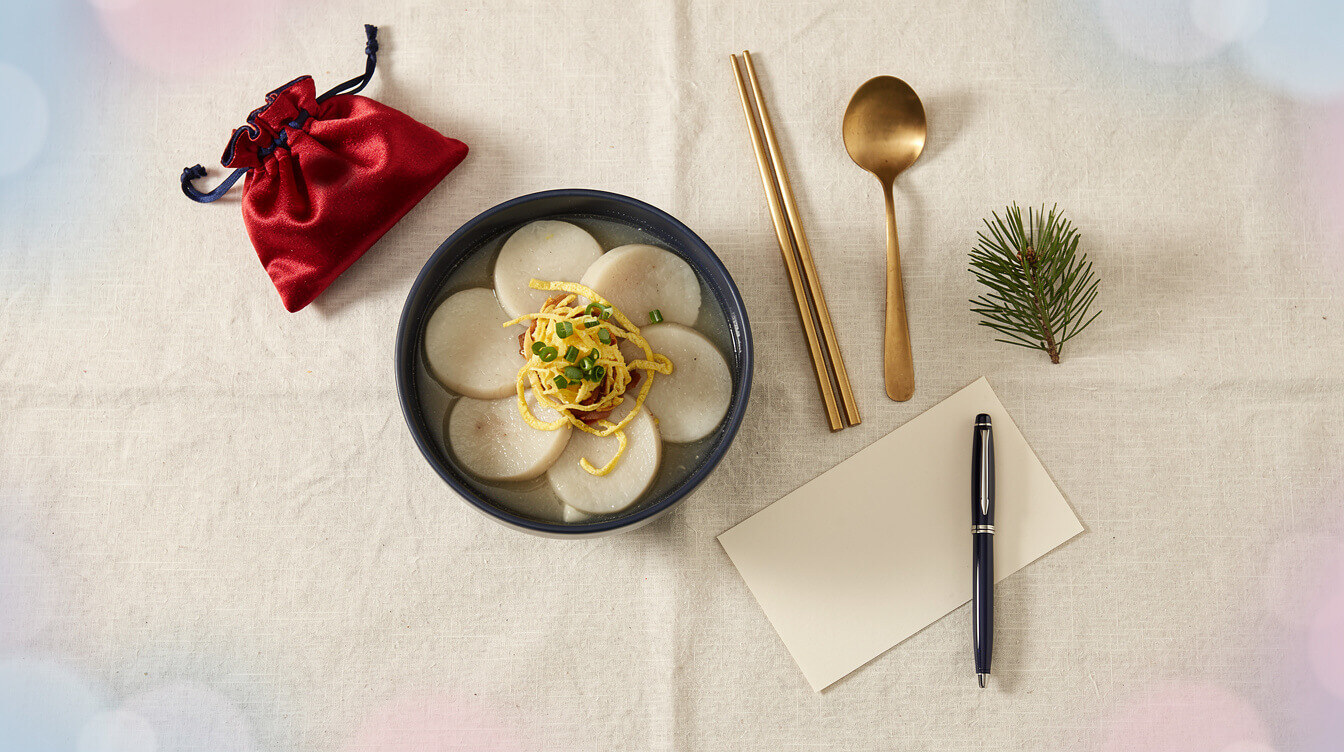
A few days before Christmas comes 동지 (dongji), the winter solstice, on December 21 or 22. Traditionally it was called 작은설 (jageunseol, “little Seollal”), and the dish is 팥죽 (patjuk), a red bean porridge with chewy rice balls called 새알심 (saealsim). According to the National Folk Museum of Korea, red beans were believed to drive away bad spirits, and some families put in as many rice balls as each person’s age, which is where the saying “you have to eat patjuk to get a year older” comes from. In some years, when the solstice falls early in the lunar month (an 애동지, aedongji), families serve red bean rice cake instead of porridge.
December is also the tail end of kimjang season, when families make the winter’s kimchi together. Our kimjang guide covers the other big family ritual of late autumn.
New Year’s Eve: the bell
Then the year closes with the bell. At midnight on December 31, the bell at 보신각 (Bosingak) in central Seoul is struck 33 times while the crowd outside counts down. After that comes January 1, then Seollal a few weeks later on the lunar calendar, and the greetings switch from Christmas to 새해 복 많이 받으세요. Our happy new year in Korean guide walks through it block by block, and we’ll cover Seollal itself before it arrives.
Christmas in Korean-American families
Ask Korean Americans what their Christmas looks like and you’ll hear some version of “both.” Both church and a party. Both turkey and japchae. Both an American Christmas and a Korean one, on the same table.
Church is a big part of it
The numbers explain why. Pew Research Center’s 2024 analysis found that 59% of Korean American adults identify as Christian, nearly twice the share in South Korea (32%). For many families, church is also the community center, so December means a Christmas service, a kids’ pageant, and a potluck afterward.
The potluck table
The Korean-American holiday table is a happy collision. A ham or turkey sits next to japchae (glass noodles), kimbap, a tray of jeon (pan-fried savory pancakes), kimchi for the people who can’t eat a meal without it, and a strawberry cream cake from a Korean bakery. Nobody thinks this is strange. It’s just dinner.
Calling Korea
Then there’s the time-zone dance. Seoul is 14 hours ahead of the East Coast and 17 ahead of the West Coast in December. That means Christmas morning in Korea is Christmas Eve evening in the US. A 9 a.m. call to halmeoni on the 25th in Seoul is a 7 p.m. call on the 24th in New York, often made from the church parking lot or right after dinner. If you’re writing a quick text instead, the polite Christmas lines in our merry Christmas guide work for grandparents too.
For heritage speakers who grew up hearing Korean at home but rarely writing it, December is a nice excuse to try. A handwritten card in careful, slightly wobbly Hangul gets kept for years.
Christmas in Korea: quick FAQ
Is Christmas a big deal in Korea?
Yes. December 25 is a public holiday, cities put up big light displays, and bakeries have their busiest days of the year. It’s just more of a couples’ and friends’ holiday than a family one.
Is Christmas Eve a holiday in South Korea?
No. Only December 25 is a public holiday. Most people work on the 24th and go out that evening.
Why is Christmas a couples’ holiday in Korea?
Korea already has two big family holidays, Seollal and Chuseok. Christmas Eve also had a long run as one of the few nights the old curfew was lifted, so it became a night for going out, and couples claimed it.
What do Koreans eat on Christmas?
There’s no set meal, but cake is close to universal, usually a whipped-cream sponge, often with strawberries. Older generations remember rotisserie chicken and buttercream cake as the classic Christmas treats.
How do Koreans say merry Christmas?
메리 크리스마스 (meri keuriseumaseu). For the polite and card versions, see our merry Christmas in Korean guide.
What is Santa called in Korea?
산타 할아버지 (santa harabeoji), “Grandpa Santa,” or simply 산타클로스.
From the shop
Haeundae Winter Sea Busan T-Shirt – Light Colors
Price range: $24.99 through $26.99
Shop this designHave a warm one, wherever you are
Christmas in Korea is a holiday that got borrowed and then made completely local: a day off with a legal name, a cake you carry home like treasure, a night out that the curfew years made special, and a December so full of 송년회 dinners that Christmas is just one of them. For fans, it’s year-end stages and alarms set for Seoul time. For Korean-American families, it’s church, japchae beside the turkey, and a call to Korea before dinner gets cold.
Wherever you spend it, eat the cake, text your friends, and send one message in Hangul to someone who’ll smile at it. 메리 크리스마스, and 화이팅!
Before you log off
Get the next one in your inbox
We write about Korean phrases, fandom culture and concert life every day. The best of it lands in one short weekly email.