Seongsu for K-pop fans: how to spend a day in Seoul’s ‘Brooklyn’ (성수동)
Spend more than a few days in Seoul as a fan and you’ll probably end up in Seongsu. Maybe a pop-up for your group just opened there. Maybe your mutual posted a cafe with exposed brick and a perfect window seat. Maybe you followed a queue around a corner and didn’t come out for four hours. Seongsu (성수동, Seongsu-dong) is the old factory neighborhood on the north bank of the Han River that turned into Seoul’s favorite place to open something new, and it rewards fans who show up with a plan and a little Korean.
This guide won’t hand you a list of shops. Those lists go stale in a month, because that’s how Seongsu works: the pop-up you saw on someone’s feed in spring is a different pop-up by summer. Instead, here’s what the neighborhood actually is, why fan events keep landing there, how to find the one that’s on this week, how not to be that person in the queue, and the street Korean that gets you through the day.
Seongsu in one minute: what 성수동 is
Seongsu-dong is a neighborhood (a dong, 동) in Seongdong District (성동구, Seongdong-gu), in the east of Seoul. It sits where the Jungnangcheon stream meets the Han River, which means it’s surrounded by water on two sides. That’s why the old name for this whole stretch of land was 뚝섬 (Ttukseom), with 섬 meaning “island.” It isn’t technically an island, but with rivers on two sides it looked like one.
The Hanja for Seongsu, 聖水, reads as “holy water,” and that’s the version tourists usually hear. Korean Wikipedia gives two older explanations. One says the name joins the first syllables of a riverside pavilion called 성덕정 (Seongdeokjeong) and the Ttukdo water source (뚝도수원지), which used to stand here. The other says it came from the clean Han River water locals drank. Either way, the “holy water” translation is a fun fact, not the whole story.
Three things to know before you go:
- It’s in Seoul, not a day trip. One of the top questions people search is “is Seongsu far from Seoul.” It’s inside the city, on subway Line 2.
- It’s split in two on paper. Addresses say Seongsu-dong 1-ga (성수동1가) or 2-ga (성수동2가). The 1-ga side runs along Seoul Forest. Seongsu station sits on the 2-ga side.
- It’s still a working neighborhood. People live here, and small workshops still make things here. You’re a guest on their street.
From shoe workshops to cafes: how Seongsu got its look
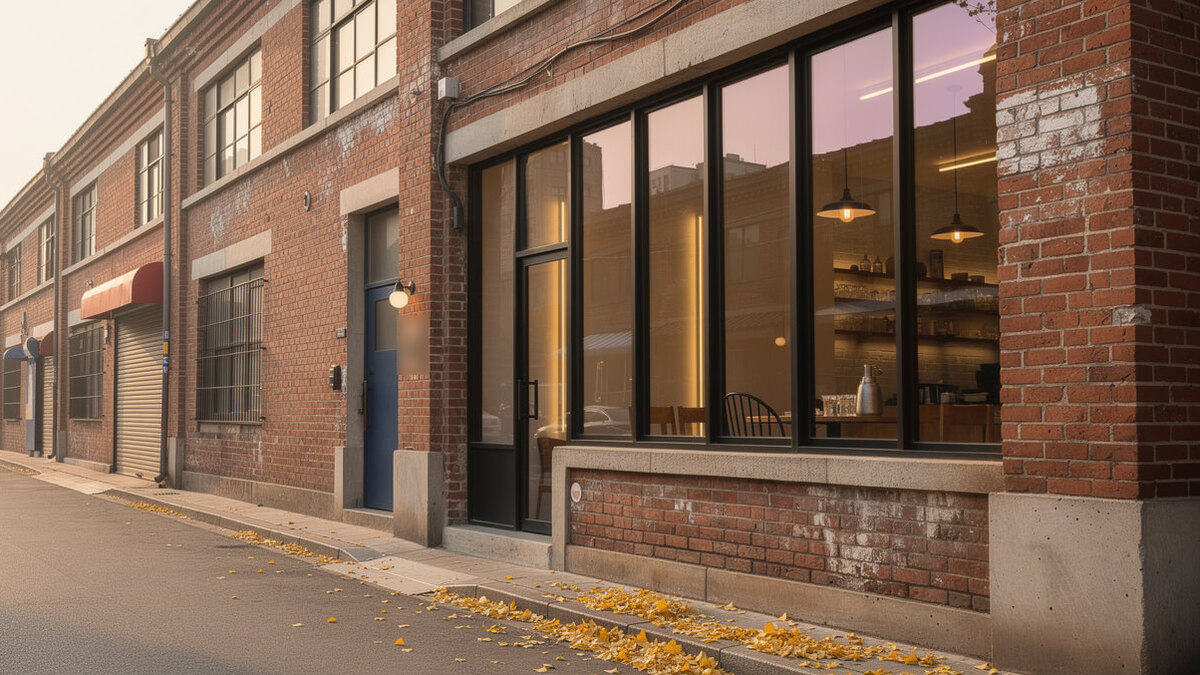
The red brick you see in every Seongsu photo is an actual industrial building, not a set. Seongsu was a semi-industrial district of small factories, and its specialty was shoes. Handmade shoe businesses started clustering here in the 1970s. A 2022 piece on the Seoul city government’s own news site calls it the country’s largest handmade-shoe district, home to more than 70 percent of Korea’s handmade shoe manufacturing. The “Seongsu handmade shoe street” (성수동 수제화 거리, Seongsu-dong sujehwa geori) runs between Seongsu and Ttukseom stations, and you’ll still pass shoemakers, leather suppliers, and parts shops between the cafes.
Then the cafes moved in. Big, cheap, high-ceilinged factory and warehouse spaces turned out to be perfect for roasteries, galleries, and concept stores, and English-language travel writers started calling Seongsu “the Brooklyn of Seoul.” The nickname stuck, and you’ll see it on half the search results for this neighborhood.
One detail explains why Seongsu still feels independent in places. Since 2017, Seongdong District has limited the entry of large companies and franchise chains (big coffee chains, cosmetics chains, buffet-style restaurants and similar) in part of the Seoul Forest side of the neighborhood, Seongsu 1-ga 2-dong. That’s one reason the streets near the park are full of one-off cafes rather than the same five chains you see everywhere else.
Fair warning: “Brooklyn” sets an expectation of graffiti and grit. What you’ll actually find is a mix. Some streets are polished and photogenic, some are still loud with workshop machines, and the best ones are both at once.
Why fans keep ending up in Seongsu
Since the early 2020s, pop-up stores (팝업 스토어, pabeop seutoeo) have become a huge part of shopping in Korea, and Seongsu became their favorite address. Korean press has called it a “pop-up mecca.” Fashion, beauty, snacks, games, characters, and yes, K-pop: if something is launching, there’s a good chance it gets a temporary store in Seongsu for a few days or a few weeks.
For fans, that usually means one of these:
- Comeback pop-ups. Around a release, a group’s team may open a pop-up with album displays, exclusive goods (굿즈, gutjeu, the fandom word for merch), and freebies. If you’re new to the cycle, our guide to what a K-pop comeback really means explains why everything clusters around those weeks.
- Photo zones. A 포토존 (potojon, photo zone) is a styled corner built to be photographed. Expect a short line just for the photo, and plan your pose before you reach the front. A two-hand heart is always safe, and our finger heart guide covers the rest.
- Trading on the side. Where fans gather, photocards come out. Pop-up queues and the cafes nearby are classic places for in-person trades, so bring your binder and read our photocard size and trading guide before you go.
- Brand collaborations. Sometimes the pop-up isn’t the artist’s at all but a brand they model for, with a cutout, a video wall, and a gift with purchase.
One thing Seongsu is not uniquely famous for: birthday cafes. Fan-run birthday cafe events and cupsleeve events happen in rented cafes all over Seoul, wherever the organizer finds a space. If you’re hunting one, follow the organizer’s post for the address rather than assuming it’s in Seongsu.
How to find this week’s Seongsu pop-up yourself
This is the section the store-list blogs skip, and it’s the one that matters. A pop-up is temporary by definition, so any list older than a few weeks is mostly wrong. Here’s how fans actually find what’s open.
1. Start from the official source
For artist pop-ups, the announcement comes from the artist’s or company’s official channels: the fan community app, official social accounts, or the fan cafe notice board. That post is the only thing you should trust for the address, the dates, the entry system, and the goods list. Screenshots reposted by fan accounts are useful for spotting a pop-up, but always click through to the original before you plan your day around it.
2. Check the entry system before you go
Pop-ups in Seongsu usually run one of two systems, sometimes both:
- 사전 예약 (sajeon yeyak), advance reservation. You book a time slot online ahead of time, often through Naver or a waitlist app named in the official post. Popular slots go fast, so set an alarm for when booking opens, the same way you would for a ticketing queue.
- 현장 대기 (hyeonjang daegi), on-site waiting. You go there and register for the waitlist (대기 등록, daegi deungnok), usually on a tablet or by scanning a code. Then you get a text when it’s your turn.
Read the small print, because the rules are strict. On one recent Seongsu pop-up, waitlist registration was one person per registration (your friends had to sign up separately), and once your entry text arrived you had 10 minutes to show up or lose your turn. So don’t register and then wander off to Seoul Forest.
3. Expect limits and early sellouts
Goods often come with purchase limits like 1인 1개 (il-in il-gae, one per person per item) and a daily stock that can sell out (품절, pumjeol) before closing. Freebies are often first-come, first-served (선착순, seonchaksun), and sometimes tied to a minimum purchase. If there’s one item you came for, go early in the run, early in the day, and have a second choice ready.
4. Use the translate button, not a 3-month-old blog
Most pop-up info is posted in Korean first. The translate button on social apps handles dates and times fine. What it mangles is the small print, so look for the words in the Korean section below (예약, 대기, 선착순, 품절) and you’ll know what each line is about even if the translation is clumsy.
Fan mail
One email a week, written like a group chat
The Korean word everyone's using, the fandom ritual behind it, and the newest designs before they hit the shop. No spam. Unsubscribe anytime.
Pop-up and queue etiquette
Seongsu queues can be long, and the way fans behave in them is how the neighborhood remembers your fandom. These are the unwritten rules.
- No cutting, no holding spots. Holding a place for “a few friends” who turn up as eight people is cutting. If your group wants to go in together, arrive together or register together.
- Follow the staff, even when it’s annoying. If staff move the line, close entry early, or change a rule, it’s usually because of neighbors, safety, or stock. Arguing at the front only slows everyone down.
- Keep the street usable. Many Seongsu queues wrap past homes, workshops, and other shops. Don’t block doorways or garage entrances, keep your voice down if the line runs past houses, and take your trash with you.
- Don’t flip the freebies. Grabbing extra pop-up freebies to resell is how they end up limited for everyone. If you trade, trade fairly, using the same rules from our photocard trading guide.
- Photo zones are shared. Take your shots, then move. If someone’s waiting, offer to take theirs. That’s how half of all fandom friendships start.
- Ask before photographing people. That includes staff, other fans, and the shoemakers working in open-front shops. Their workplace isn’t a backdrop.
Pack like you would for a concert line: water, a snack, a charged phone, and a power bank. Our list of what to bring to a K-pop concert has a “waiting kit” that works just as well for a pop-up queue.
A slow day in Seongsu: brick cafes, Seoul Forest, and the river

The best Seongsu days have one booked thing and a lot of wandering. Here’s how to fill the gaps without a store list.
Cafe-hop the factory buildings
Walk the side streets around Seongsu station and look up. Converted factories and warehouses are easy to spot: tall steel windows, roll-up shutters, a second floor that used to be a workshop. Many are cafes or galleries now. One tip: popular cafes often have a 웨이팅 (weiting, waiting) list at the door just like pop-ups do. If there’s a tablet by the entrance, that’s where you sign up.
Walk Yeonmujang-gil
연무장길 (Yeonmujang-gil) is one of the neighborhood’s main streets, lined with street art, industrial buildings, shops, and seasonal pop-ups. Seoul’s official tourism site describes it as a street you can wander any time of day. It’s the easiest place to stumble on something you didn’t plan for.
Reset in Seoul Forest
When the queues get to you, go to Seoul Forest (서울숲, Seoul Sup). It’s a big public park on the Seongsu side of the neighborhood. The history is great trivia for the walk: this land was a royal hunting ground in the Joseon era, then home to Seoul’s first water purification plant in 1908. Later came an amusement park, then a horse racing track from 1954. The park itself opened in June 2005. Korean Wikipedia lists it as Seoul’s third-largest park, and it’s free to walk in.
Part of that horse track history survives in the subway. While Ttukseom station was being built, its working name was 경마장앞역 (Gyeongmajang-ap-yeok), literally “in front of the racetrack station.”
Find the river
Seoul Forest runs down to the Han River, with a waterside section and a bike path. On a clear afternoon it’s the cheapest view in the neighborhood. One trap to avoid: Ttukseom station is not Ttukseom Hangang Park. The riverside park with that name is in neighboring Gwangjin District, reached from Jayang station on Line 7. The platform at Ttukseom station even has a sign explaining this, because so many people get it wrong.
Korean you’ll actually use on the street
You can get through Seongsu with pointing and a smile, but these words turn a confusing pop-up notice into something you can read. If you’re working on Hangul, this is a great real-world vocabulary list.
Words on signs and posts
- 팝업 (pabeop): pop-up. You’ll see 팝업 스토어 in full or just 팝업.
- 예약 (yeyak): reservation. 사전 예약 is booking in advance.
- 현장 대기 (hyeonjang daegi): on-site waiting. 대기 등록 is signing up for the waitlist.
- 웨이팅 (weiting): the waitlist or the wait itself, borrowed from English “waiting.” Used at cafes and restaurants as much as pop-ups.
- 줄 (jul): the line or queue. 줄 서다 (jul seoda) means to stand in line.
- 오픈런 (opeunreon): “open run,” slang for lining up before a store opens to get something popular.
- 입장 (ipjang): entry or admission.
- 선착순 (seonchaksun): first come, first served.
- 품절 (pumjeol): sold out.
- 1인 1개 (il-in il-gae): one per person.
- 굿즈 (gutjeu): goods, the merch you came for.
- 포토존 (potojon): photo zone.
Phrases to say out loud
- 줄 서신 거예요? (jul seosin geoyeyo?): “Are you in line?” Polite and useful when a queue looks like a crowd.
- 여기가 줄 끝이에요? (yeogiga jul kkeuchieyo?): “Is this the end of the line?”
- 대기 등록 어디서 해요? (daegi deungnok eodiseo haeyo?): “Where do I sign up for the waitlist?”
- 예약했어요. (yeyakhaesseoyo.): “I have a reservation.” Show the confirmation on your phone at the same time.
- 사진 찍어도 돼요? (sajin jjigeodo dwaeyo?): “Is it OK to take photos?”
- 포장해 주세요. (pojanghae juseyo.): “To go, please,” for your cafe order.
To get a staff member’s attention, 저기요 (jeogiyo, “excuse me”) is the safe default. At small shops you’ll also hear customers call the owner 사장님 (sajangnim). Our post on what to call people in Korean instead of ajumma explains when each one fits. And when your friend finally gets the item they queued three hours for, 대박 (daebak) is the word you’re looking for. We broke it down in daebak meaning.
Getting to Seongsu and where to go next
Seongsu has three main stations, and which one you pick depends on what you’re there for.
- Seongsu station (성수역), Line 2. The center of the cafe and shoe-street area. Line 2 is the green loop line that also runs through Gangnam and Hongik Univ. (Hongdae) stations, so Seongsu is easy to reach from most fan neighborhoods.
- Ttukseom station (뚝섬역), Line 2. One stop west. It’s handy for the Seoul Forest end and the far end of the shoe street.
- Seoul Forest station (서울숲역), Suin-Bundang Line. Right by the park, about 450 meters from Ttukseom station but a separate station. The next stop south runs in a tunnel under the Han River to Apgujeong Rodeo, so it’s a quick hop between the north and south banks.
Line 2 tip: Seongsu station is where a short branch line splits off Line 2 toward Sinseol-dong. Check the destination on the train and the platform screen so you don’t end up on the branch by accident.
Is Seongsu near Myeongdong? Not walking distance, but it’s an easy subway trip. Take Line 2 toward City Hall to Dongdaemun History & Culture Park, transfer to Line 4 heading toward Oido, and Myeongdong is two stops later. Ride time depends on the time of day, so check a Korean map app before you go.
If you’re building a fan day, Seongsu pairs naturally with anything else on Line 2. Do the booked pop-up first, cafe-hop through the afternoon, then walk into Seoul Forest for sunset. You’ll be tired and broke, but happy.
Seongsu FAQ
Is Seongsu worth visiting?
If you like cafes, design, and being in the middle of whatever’s launching right now, yes. If you only want classic sights like palaces and markets, plan a shorter visit. Seongsu is less about landmarks and more about what’s on this month.
Why is Seongsu so popular?
Old factory and warehouse buildings gave it big, unusual spaces. Cafes and studios moved in, and from the early 2020s brands started using it as Seoul’s pop-up address. Add Seoul Forest and a Line 2 connection, and it became the place people go to see what’s new.
Is Seongsu far from Seoul?
It’s in Seoul. Seongsu-dong is part of Seongdong District, on the north side of the Han River, served by Line 2 and the Suin-Bundang Line.
Do I need to speak Korean?
No, but a few words help a lot, especially reading pop-up rules. Learn 예약, 대기, 줄, and 품절 and you’ll understand most notices.
Where can I find a list of current pop-ups?
Fan accounts and pop-up listing accounts are great for discovery, but always confirm on the official announcement before you go. Dates, entry systems, and goods change, sometimes mid-run.
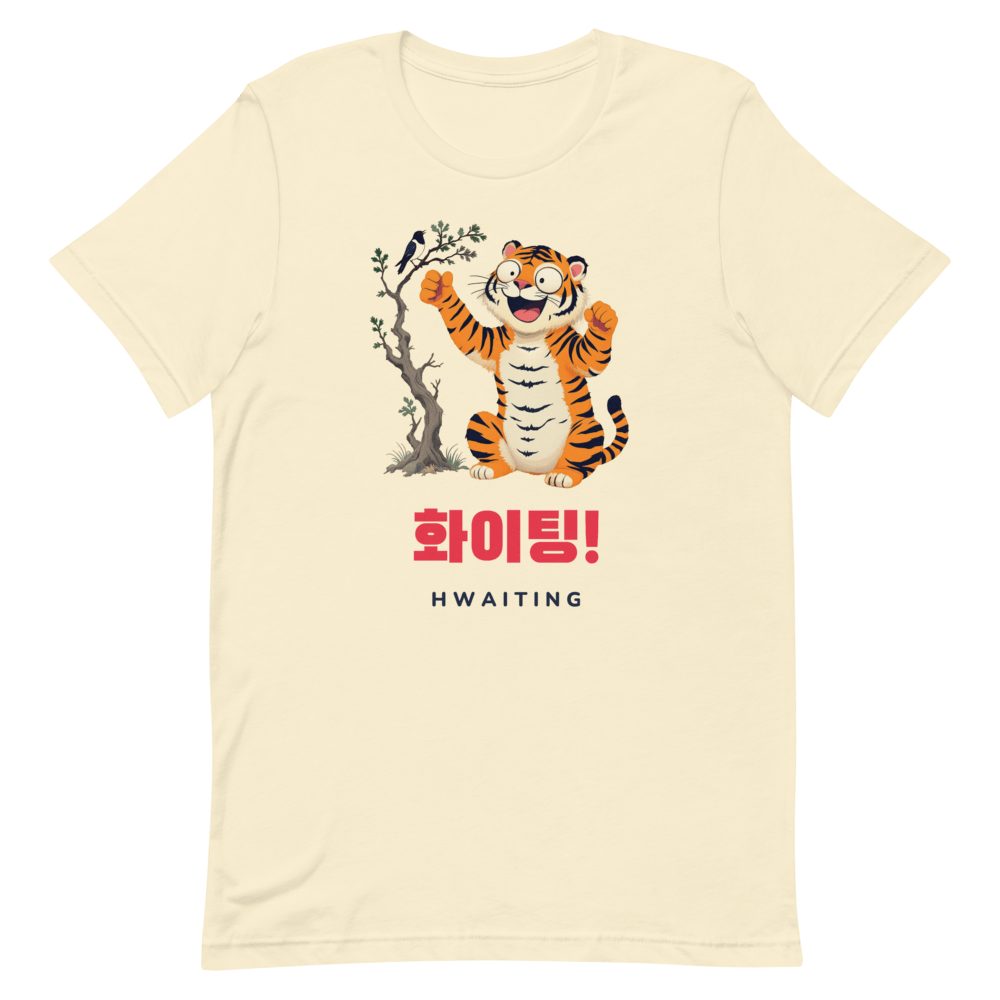
From the shop
Hwaiting Korean Tiger Cheering T-Shirt
Price range: $24.99 through $26.99
Shop this designFinal thoughts: go slow, go curious
Seongsu is the neighborhood where a shoemaker’s workshop shares a wall with a pop-up that’ll be gone in ten days. That’s the charm, and it’s also why no blog list can give you the full picture. Find your pop-up on the official channel, learn the five words on the sign, be the fan the staff remembers for good reasons, and leave room in the day for whatever you find around the corner. And if your favorite group’s pop-up is there when you land, go early, queue kindly, and 화이팅!
If you’re still building your Korean, start with the word in our name. Here’s what hwaiting really means, and why it’s the right thing to shout at your friend when they reach the front of the line.
Before you log off
Get the next one in your inbox
We write about Korean phrases, fandom culture and concert life every day. The best of it lands in one short weekly email.