
K-pop fanchant meaning: what 응원법 is, how a chant works, and how to learn one
The first time you hear a fanchant live, it sounds like magic. The intro drops, and 10,000 people shout the same names in the same order on the same beat, then go silent for the first verse like someone hit mute. Here’s the K-pop fanchant meaning in one line: a fanchant is a scripted set of cheers that fans shout together during set parts of a song, mostly member names and short lyric lines, timed to the gaps where nobody on stage is singing. It isn’t magic. It’s homework, and anyone can do it.
This guide covers what the word means in Korean, what a fanchant is actually made of, where the chants come from, how they relate to Korea’s wider cheering culture, and how to learn one before your next show without crying over a lyric sheet at 2 a.m. (Some crying is allowed.)
K-pop fanchant meaning: what 응원법 says
In English fandom spaces the word is “fanchant,” sometimes “fan chant.” Korean fans mostly call it 응원법 (eungwonbeop), and the word breaks down neatly:
- 응원 (eungwon, 應援): cheering, rooting for someone. It’s the same word you’ll hear for cheering at a sports match.
- -법 (-beop, 法): a suffix meaning “way” or “method,” the same one in 사용법 (sayongbeop, “how to use”).
So 응원법 is literally “the way to cheer” or “cheering method.” That’s a nice reminder of what it is: not a free-for-all scream, but a set method that a whole crowd learns together. The same root shows up in 응원봉 (eungwonbong), “cheering stick,” which is the Korean word for a lightstick.
Fans use 응원법 for the whole package: the script, the guide that teaches it, and the act of doing it at a show. “Did you learn the 응원법?” is a normal question in a group chat the week before a concert. When fans talk about a crowd singing the whole song together, that’s a different word, 떼창 (ttechang). We’ll get to it.
One more thing the word tells you: it’s support, not performance. The point of a fanchant isn’t to show off how loud your section is. It’s to tell the people on stage, in the moments they aren’t singing, that you’re there.
What a K-pop fanchant is actually made of
Every song’s chant is different, but most are built from the same few pieces. Once you can spot them, any new fanchant guide stops looking like a wall of text.
The name call in the intro
This is the part everyone recognizes. During the instrumental intro (전주, jeonju), fans shout each member’s name in a fixed order, usually ending with the group’s name. Many groups’ chants use members’ full birth names (본명, bonmyeong) rather than stage names (예명, yemyeong), Korean-style, with the family name first. In print, it looks like this:
Kim ○○ / Lee ○○ / Park ○○ / Choi ○○ / (group name)
Bigger groups mean longer name calls. Some chants run the list once, then again in reverse, so a big group’s intro is basically a memory test with a beat. If you only learn one part of a fanchant, learn this one. It’s the loudest moment of the song and the one the members can hear most clearly.
The gap fills
After the intro, the chant lives in the empty spaces: the beat between lines, the pause before a chorus, the dance break, the interlude (간주, ganju). Fans fill those gaps with a member’s name, a short phrase, or a count. A K-pop fanchant almost never runs on top of a member’s solo line. When someone’s singing, you’re quiet. That’s the rule that makes everything else work.
The echo lines
Some chants have fans repeat a short lyric right after the members sing it, call-and-response style. Others have fans shout a word along with them on a hook. These are usually a few words at most, picked because they’re easy to say and land on a strong beat.
The chorus sing-along
Many chants mark the chorus (후렴, huryeom) or the final hook as “everyone sings.” This is where the fanchant turns into a full crowd sing-along for a few bars, and it’s usually what gives you goosebumps in the fancam later.
Ballads play by different rules
Slow songs often have a much lighter chant or none at all. You might only do the name call in the intro and sing along at the end, and that’s it. A ballad is not the place to prove you memorized everything.
Put all that together and the K-pop fanchant meaning gets clearer: it’s a support script built around the music, filling exactly the spaces the song leaves open. As English Wikipedia’s overview of K-pop fandom puts it, the chants usually consist of group members’ names and are performed by concert audiences during the non-singing parts of songs.
Where fanchants come from
Fanchants don’t appear out of nowhere at the first concert. They usually come from one of two places.
Official guides. Around a debut or a comeback, the artist’s side often posts a 응원법 guide for the title track. It might be a video with the lyrics on screen and the fan parts highlighted, a graphic on the group’s social accounts, or a post on their fan community platform. Sometimes the members demonstrate it themselves, which is adorable and also very useful, because now you know exactly how fast they expect you to say their names.
Fan-made guides. For B-sides, older songs, solo tracks, and songs that never got an official guide, fans fill the gap. Big fanbases write chant guides, color-code lyric sheets (fan parts in bold or a different color), and post romanized versions for international fans. Over time a crowd settles on one version, and that becomes “the” chant even though no one official ever wrote it down.
That’s also why chants spread so fast. A new title track comes out, a guide drops during comeback week, and by the first music show stage the people in the studio are already shouting it. Then fancams of that stage carry the chant to everyone who wasn’t there.
A practical tip: when you search for a chant, check whether the guide you found is official or fan-made, and check the date. Chants can change between a song’s first promotions and a later tour, especially if the members add something new on stage. The most recent official guide usually wins.
Fanchant, 떼창, and Korea’s cheering culture

A fanchant is one piece of a bigger Korean habit: the audience is part of the show. If you’ve ever wondered why K-pop crowds are so loud and so organized, it helps to know the neighbors.
떼창 (ttechang): the crowd sing-along
떼창 (ttechang) combines 떼 (tte, “crowd, group”) and 창 (chang, 唱, “to sing”). It means the whole audience singing a song together, usually the full chorus or even the full song. Korean crowds singing along at concerts have made headlines overseas for years. Visiting pop and rock acts have talked about it in interviews, and Korean media have written about the “떼창 culture” again and again.
The difference is simple. A fanchant is the scripted cheer in the gaps. 떼창 is everyone singing the song itself. At a K-pop show you’ll often get both in the same song: a chant in the verses, then 떼창 on the last chorus, sometimes with the members stepping back from the mic to let the crowd take it.
추임새 (chuimsae): the old-school version
Long before lightsticks, Korean audiences were calling out during performances. In 판소리 (pansori), the traditional sung storytelling performed by a singer and a drummer, the drummer and the audience call out short exclamations called 추임새 (chuimsae) between lines, things like 얼씨구 (eolssigu) and 좋다 (jota, “good”). They’re there to lift the singer and keep the energy up. UNESCO lists pansori as part of humanity’s intangible cultural heritage. Nobody’s saying a modern fanchant comes directly from pansori, but the instinct is familiar: cheer in the gaps, never over the singer.
Baseball fight songs
If you’ve seen clips of a Korean baseball game, you’ve seen the same muscle. Korean pro baseball crowds sing team songs and individual fight songs, often one for each batter, led by a cheer captain (응원단장, eungwondanjang) and cheerleaders. The melodies often borrow from pop and K-pop songs, with lyrics rewritten so a stadium can sing along. A K-pop fan walking into a ballpark in Seoul tends to figure it out in about two innings.
Put those together and the fanchant stops looking like a quirky fandom rule. It’s a very Korean way of saying “we’re here with you,” just set to a 4-minute pop song.
Fan mail
One email a week, written like a group chat
The Korean word everyone's using, the fandom ritual behind it, and the newest designs before they hit the shop. No spam. Unsubscribe anytime.
Where you’ll use a fanchant
Fanchants show up anywhere fans can be heard. Each place feels a little different.
Concerts. This is the big one. Solo concerts are where the chant is loudest and most complete, because the whole room is one fandom and most people have done the homework. Your lightstick does its own synced light show while your voice does the chant. If you’re going soon, our concert-day checklist covers what to pack. The chant is the one thing you can’t pack, so learn it beforehand.
Music show recordings. Korea’s weekly music shows let fans attend recordings, including 사전녹화 (sajeon nokhwa, “pre-recording”), shortened to 사녹 (sanok). Fans wait in line, often in the cold, and you can tell fandoms apart by the lightsticks they’re holding. That small studio crowd shouting the chant is a big part of the cheering you hear on a comeback stage, which makes it the first real test of a new chant.
Festivals and multi-artist shows. When several acts share a stage, every fandom chants for its own artist. Good manners matter here: you chant during your artist’s set and you stay respectful (or quietly join in) during everyone else’s.
Fanmeetings and smaller events. These are often more relaxed. You’ll still hear the name call, though it’s often more about the jokes and games than full chants.
At home. Plenty of fans practice along with a guide while streaming a comeback, and some fans who can’t make it to a show do the chant at their screen anyway. No one’s judging. It counts.
How to learn a fanchant in five steps
Here’s the method that works for most fans, whether you have three weeks before a tour date or three days.
- Find the guide. Search the song title plus “fanchant” or “응원법.” Start with the official guide if one exists, then check a recent fan guide for B-sides. Use one version only, so you don’t mix two.
- Learn the name call first. Read the names out loud until you can say them in order without looking. Korean names are usually two syllables after a one-syllable family name, so say each name as three quick beats. Pay attention to how the names sound in Korean, not how the romanization looks.
- Mark the gaps. Play the song and tap the table every time a fan part comes up. Don’t say anything yet. You’re learning where the holes in the music are, and the timing matters more than the words.
- Add the words section by section. Intro, first verse, pre-chorus, chorus. Loop each section until it’s automatic, then join them. Echo lines are easier than they look once you know the lyric they’re echoing.
- Practice with a performance, not just the audio. Watch a live stage or a fancam where the crowd is chanting. Live versions often run faster, have longer intros, or add a dance break the studio track doesn’t have. This is where you learn the real speed.
A few honest tips from experience:
- You don’t need to speak Korean. Most of a fanchant is names and short lines. Romanized guides exist for a reason, and a chant guide is a fun way to start reading Hangul.
- Learn the title track first. If the show is close, prioritize the songs most likely to be performed: title tracks, then the B-sides fans talk about the most.
- The name call is the minimum. If you only get the intro right, you’ve still done the part that matters most.
- Read up on names and honorifics. If you’re curious why fans use full names and how Korean address works, our guide to Korean honorifics explains the basics.
Fanchant etiquette for first-timers
The fanchant is a group project. A few unwritten rules keep it working for everyone, including the people on stage.
Never chant over a vocal. If a member is singing a solo line, an ad-lib, or a quiet bridge, you’re quiet. The whole design of a chant depends on this. Shouting over a high note isn’t support.
Follow the crowd, not your notes. If the venue is doing a slightly different version than the guide you learned, go with the room. One loud voice doing the “correct” version against 5,000 people is just noise.
Let the quiet moments be quiet. Between songs, the members talk to the audience. Fans call those talks “ments,” from the Korean 멘트 (menteu). Screaming during a ment means nobody hears it. Cheer when they pause and save the shouting for after.
Your bias gets the same volume as everyone else. The name call is for the whole group. Screaming your bias‘s name twice as loud as the others is a classic beginner move. Everyone has a favorite. The chant is the one time we all treat the members equally.
Be kind to the people who don’t know it. Someone near you might be at their first show, or might be a friend dragged along to their first K-pop concert. Point them toward the name call. Nobody learned it before their first time either.
Respect other fandoms. At a shared show, every fandom’s chant is someone’s favorite moment. Don’t talk over it, don’t mock it, and if you know it, join in. Every fandom welcome, including in the venue.
Frequently asked questions
What does fanchant mean in K-pop?
A fanchant is a set of cheers fans shout together during a live performance, timed to parts of the song where the members aren’t singing. It’s usually member names in the intro, short phrases or names in the gaps, and a sing-along on the chorus. In Korean it’s called 응원법 (eungwonbeop), literally “cheering method.”
Is a fanchant the same as a sing-along?
Not quite. A fanchant is the scripted cheering in the gaps. A full crowd sing-along is 떼창 (ttechang). Many songs include both: a chant through the verses and a sing-along at the end.
Why do fans chant the members’ real names?
Many official chants use members’ full birth names, family name first, rather than stage names. Fans usually take this as a sign of affection: you’re cheering for the person, not just the stage persona. That’s not universal, though. Some chants use stage names, so follow the guide for that song.
Does every song have a fanchant?
No. Title tracks almost always do, and fans often make chants for popular B-sides. Ballads may have only a name call or none at all. If you can’t find a guide, watch a recent live performance and listen to what the crowd does.
Do fanchants happen at concerts outside Korea?
Yes. International crowds learn the same chants from the same guides, often using romanized versions. Not every crowd hits every line perfectly, but the intro name call usually comes through loud anywhere in the world.
Do I have to do the fanchant?
No one is checking. But it’s one of the best parts of a show. Even if you only learn the name call, you’ll feel the difference between watching the concert and being part of it.
From the shop
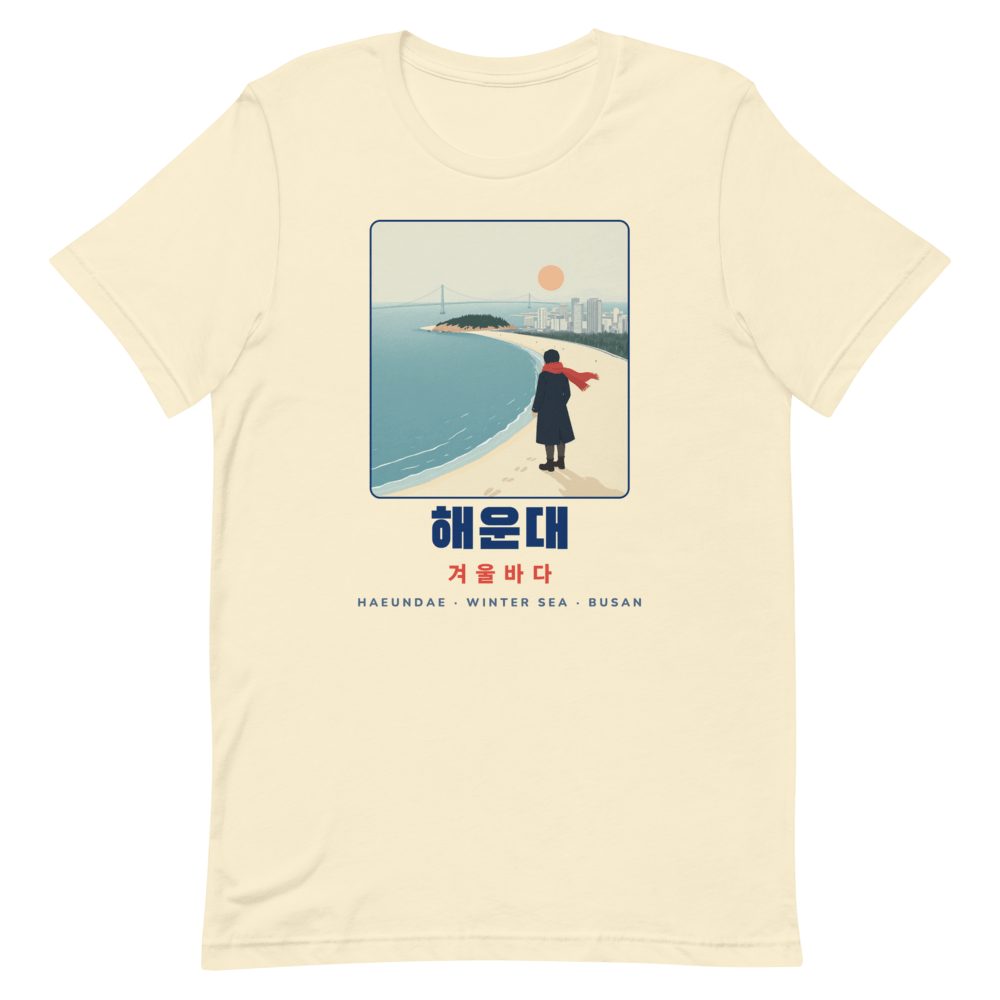
Haeundae Winter Sea Busan T-Shirt – Light Colors
Price range: $24.99 through $26.99
Shop this designThe short version
The K-pop fanchant meaning comes down to this: 응원법 is “the way to cheer,” a script fans learn so that thousands of people can support the stage at exactly the right moments without stepping on a single note. Names in the intro, short lines in the gaps, silence when someone sings, and everyone together on the last chorus.
It comes from a long Korean habit of the audience joining in, from pansori’s 추임새 to the baseball bleachers, and it’s one of the friendliest rituals in fandom, because anyone can learn it. Pick a song, learn the name call tonight, and practice the gaps tomorrow. When the intro hits at your next show, you’ll be shouting with everyone else.
If you want to keep going, start with what hwaiting really means, the cheer that’s also our name, then learn saranghae for the moment the members say it to the crowd. Practice the name call, bring your voice, and 화이팅!
Before you log off
Get the next one in your inbox
We write about Korean phrases, fandom culture and concert life every day. The best of it lands in one short weekly email.