Maknae meaning: what 막내 says about age, family, and every K-pop group
Maknae meaning, in one line: 막내 (maknae) is the Korean word for the youngest person in a group. It started at home, where it means the last-born child, and it travels everywhere Korean people form a group: offices, sports teams, friend circles, and yes, every idol group you’ve ever stanned. If you’ve watched a variety show where the older members feed the youngest first, tease them relentlessly, and then get bossed around by them five minutes later, you’ve already seen the whole word in action.
This guide covers what maknae literally means, where the word comes from, why it’s spelled one way and pronounced another, how it works at home and at work, the age rules behind it (including the 2023 change to how Korea counts age), and the fan nicknames like golden maknae and maknae on top. No idol names needed. Fans will know.
Maknae meaning: the short answer
막내 (maknae) = “the youngest.” Wiktionary gives it two senses, and you need both:
- The youngest child in a family. The last-born son or daughter, the baby of the family, however grown up they are. A 40-year-old can still be the family maknae at Chuseok dinner.
- The youngest person in any group. A team, a club, a friend group, a workplace. In idol fandom, this sense narrows to “the youngest member of the group,” and that’s the meaning English picked up.
The opposite word is 맏이 (maji), the eldest child. In idol talk you’ll hear “leader” and “maknae” paired a lot, but they aren’t opposites. The leader is a job. The maknae is a birthday. We’ll get to why that matters.
One more thing new fans don’t expect: maknae is not a cute nickname someone invents. It’s ordinary, everyday Korean. Your coworker’s mom uses it. A news anchor can use it. Fandom just gave it a spotlight, a lightstick, and a thousand fancams.
Where 막내 comes from (and why it sounds like “mangnae”)
According to Wiktionary, 막내 goes back to an 18th-century form, 막나이 (mangnai). Break that down and it’s a tiny story: 막 (mak, “end,” the same 막 you hear in 마지막, majimak, “the last”) plus 낳- (nat-, “to give birth”) plus -이 (-i, a suffix for a person). Roughly: “the one born at the end.” Over time the middle squeezed together and you got 막내.
It’s a native Korean word, not one built from Chinese characters. If you see a Chinese-character spelling floating around fan sites, it’s a sound-alike that Mandarin-speaking fans use to write the loanword, not the word’s origin.
The spelling vs. the sound
Here’s the part that confuses learners. Korean has a sound rule: when a ㄱ (k) sound lands right before a ㄴ (n), it turns into an ng sound. So 막내 is written mak-nae but said [망내] mang-nae. The official Revised Romanization, which follows pronunciation, spells it mangnae. Fandom spells it the way it’s written in Hangul, maknae, and that spelling won. It’s the spelling English borrowed, it’s in every fan glossary, and it’s what you’ll type.
Say it out loud: MAHNG-neh, two even beats, the second vowel somewhere between “eh” and “ay.” If you say “MAK-nay” with a hard K, every fan will still understand you. But now you know why your Korean teacher’s version sounds softer.
The maknae at home and at work

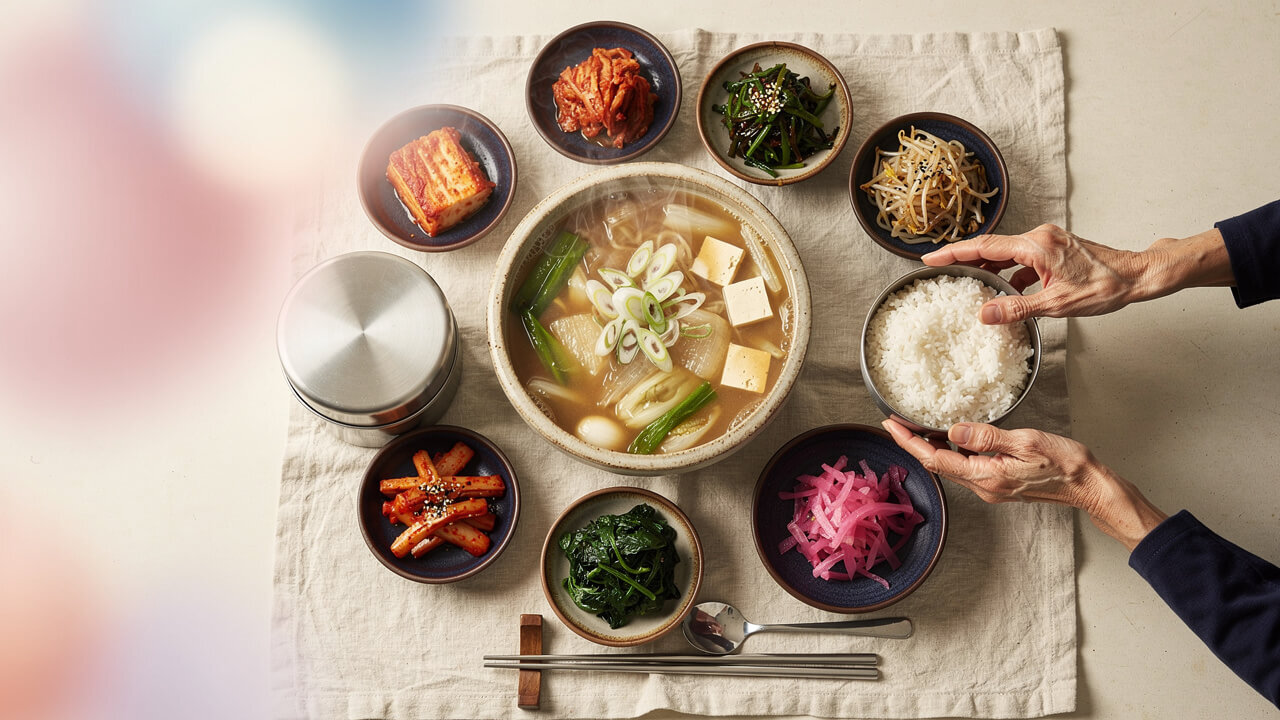
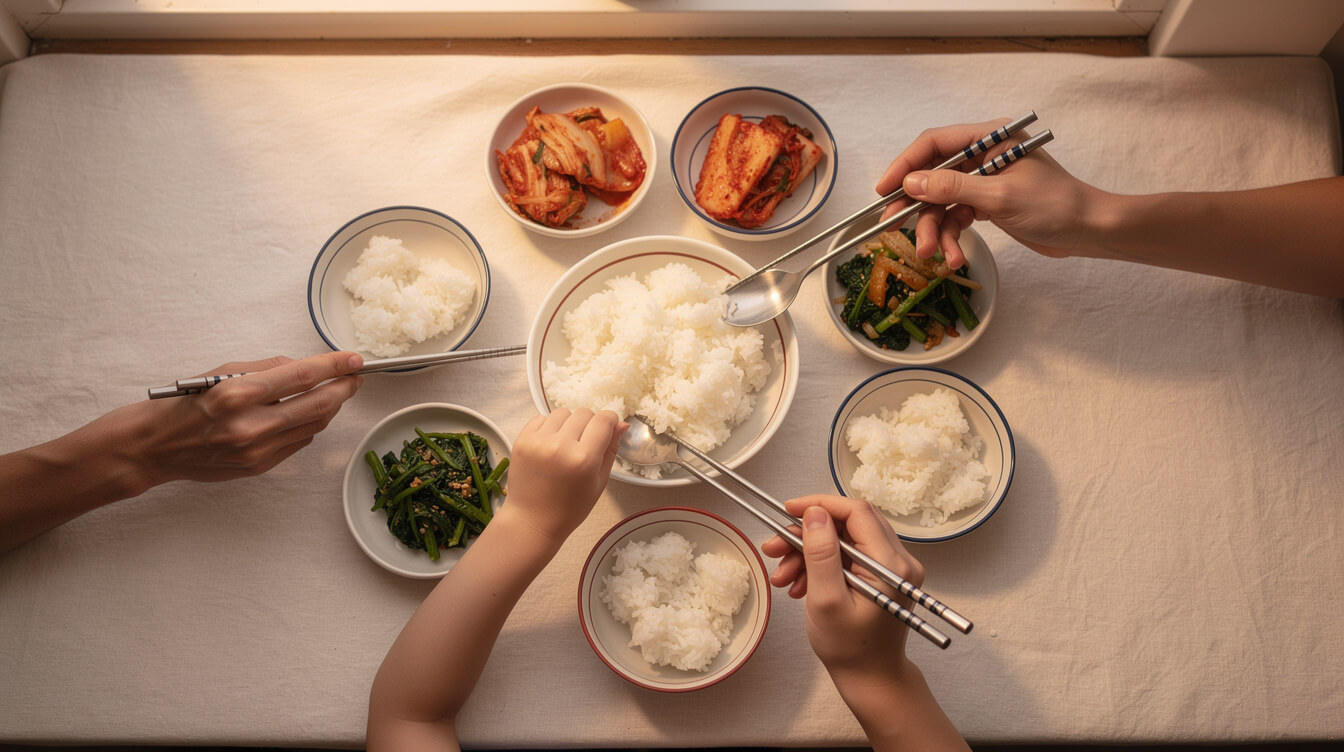
Before 막내 meant anyone on a stage, it meant someone at the dinner table. In Korean families, the maknae has a recognizable spot: loved, a bit spoiled, a bit bossed around by older siblings, and never quite allowed to grow up in the family’s eyes.
Family words built on 막내
These are romanized the way they sound, so 막내 shows up as mangnae:
- 막내딸 (mangnaettal): the youngest daughter.
- 막내아들 (mangnaeadeul): the youngest son.
- 막둥이 (makdungi): an affectionate, diminutive way to say “the baby of the family.” This is the word your halmeoni uses when she pinches your cheek at 27.
- 막내둥이 (mangnaedungi): another affectionate form with the same feeling.
- 맏이 (maji): the eldest, the maknae’s opposite.
If you grew up Korean abroad, you probably know the maknae experience without ever needing the word: you’re the one sent to the fridge for more banchan, the one whose plate gets filled first, and the one whose opinion at a family meeting counts for slightly less than everyone else’s. All of that, at once.
The office maknae
The word follows people into work. In a Korean office, the newest or youngest person on a team often gets called the team 막내. Korean workers write whole essays about “the role of the maknae on a team”: learning the ropes, handling small tasks, keeping the mood light, and eventually the strange day when someone newer arrives and you’re not the maknae anymore.
That last part is key, and it carries straight over to fandom: being the maknae is relative. You’re the youngest in this group. Join a different group and you might be the oldest.
Age hierarchy in one minute (and the 2023 change)
You can’t understand maknae without understanding why age matters so much in Korean. The language itself changes depending on who’s older. You speak to someone older with more polite speech, and you call them by a title instead of their name:
- 형 (hyung): what a younger man calls an older man.
- 오빠 (oppa): what a younger woman calls an older man.
- 누나 (noona): what a younger man calls an older woman.
- 언니 (unnie, Revised Romanization eonni): what a younger woman calls an older woman.
The maknae is the one person in the group who calls everyone by one of those titles and gets called by name back. Someone born the same year as you is 동갑 (donggap, “same age”), and that’s who you can drop the formalities with first. This is why one of the first questions Koreans ask a new acquaintance is how old they are, or what year they were born. It’s not nosiness. It’s figuring out which grammar to use.
How Korea counts age now
For years, “Korean age” confused every international fan: you were 1 at birth and got a year older every January 1, so an idol’s “Korean age” could be up to two years higher than their age anywhere else. That changed. South Korea’s National Assembly passed a law in December 2022 to standardize on international age (만 나이, man nai, counting from 0 and going up on your birthday) for official and legal purposes, and it took effect on June 28, 2023. Some laws have also used “year age,” which is just the current year minus your birth year.
What didn’t change: who’s older than whom. Two members born in different years are in the same order no matter which system you use. The maknae is still the maknae. The law changed the paperwork, not the dinner table.
Fan mail
One email a week, written like a group chat
The Korean word everyone's using, the fandom ritual behind it, and the newest designs before they hit the shop. No spam. Unsubscribe anytime.
Why the maknae is a role, not a position
A lot of English-language explainers list “maknae” next to “leader,” “main vocalist,” “main dancer,” “visual,” and “center,” as if it’s one of the group positions. It isn’t, and that difference is the most useful thing to understand about the maknae meaning in K-pop.
Positions like main vocal or main dancer describe what someone does on stage, and their company assigns them. Leader is a job, too: someone speaks for the group, gives the acceptance speech, and takes the heat. The maknae is just arithmetic. Nobody auditions for it. Line up everyone’s birthdays, and the last one is the maknae. That’s why the maknae can also be the main vocalist, the main dancer, and the center at the same time. They’re separate things.
It’s also why the title can move. If a group adds a younger member, the old maknae hands it over, often with a lot of on-camera drama about it. And because it’s relative, a group can talk about its maknae line (막내 라인, mangnae rain, with 라인 borrowed from English “line”), the younger members as a set. Fans pair it with hyung line or unnie line for the older ones. The “line” comes from Korean fan slang for any members who share a trait: born the same year, same vocal type, same terrible jokes.
So when a fan says “the maknae is carrying this comeback,” they aren’t naming a job title. They’re saying the youngest one is doing great, and they’re a little proud about it, the way you’d be proud of a younger sibling.
Fan nicknames for the maknae, decoded
Because the maknae comes with built-in expectations (cute, babied, a bit shy), fans love any maknae who breaks the mold. That’s where most maknae nicknames come from. Here’s the glossary, no names attached.
Golden maknae (황금막내)
황금 (hwanggeum) means “gold.” A golden maknae is the youngest member who seems good at everything: singing, dancing, drawing, sports, whatever the variety show throws at them. The joke is that the baby of the group turned out to be the most overpowered one. It’s a compliment, though fans also argue (kindly, we hope) about whether it puts too much pressure on one person.
Maknae on top (막내온탑)
막내온탑 (maknae-on-tap) is a Korean-English blend: 막내 plus “on top.” It describes a maknae who doesn’t act like the youngest at all, who pranks the older members, teases them without fear, and somehow runs the group from the bottom of the age chart. Korean wiki and dictionary-style sites define it as the youngest who plays freely with the older members and comes out ahead.
Evil maknae, giant maknae, and friends
These are English-side fan coinages, not standard Korean words, so treat them as fandom slang:
- Evil maknae: the mischievous youngest, all pranks and sass. Affectionate, never an insult.
- Giant maknae: the youngest who’s also the tallest. Endless photos of older members looking up at “the baby.”
- Fake maknae: an older member who acts so much like the baby that fans joke they’re the real maknae.
- Maknae line: covered above, the younger members as a group.
Every fandom has its own spin on these. If your fandom has a maknae nickname that isn’t here, it’s probably an in-joke from a specific moment, and that’s the best kind.
How to use maknae in your own friend group or fandom
You don’t need to be in an idol group to have a maknae. The word works great in your own life, and Korean speakers use it this way all the time.
Phrases you can actually use
- 우리 막내 (uri maknae): “our maknae,” “our baby.” 우리 (uri) is “our,” and Koreans use it warmly for people they feel close to. Fans say it about the youngest member, and your aunt says it about you.
- 막내야 (maknae-ya): calling out to the maknae. The -야 (-ya) is the casual “hey” you put after a name ending in a vowel. Use it only with people you’re close to.
- “I’m the maknae of our group chat.” In English, fans just drop the word in. Everyone in the chat will know you mean you’re the youngest, and probably the one who gets told to go to bed.
A little etiquette
The maknae meaning comes with affection built in, but keep two things in mind. First, the word describes a person’s place in a group, not their maturity. Idol maknaes are working adults with careers, and calling someone “the baby” forever can start to feel like you’re not letting them grow up. Fans who’ve been around a while will tell you the best part of following a maknae is watching them grow up into themselves. Second, at work in Korea, being the 막내 can mean doing more of the small, unglamorous tasks. If you’re the maknae on a team, the word can feel less like a cuddle and more like “you’re on coffee duty.” Read the room.
And if you’re the eldest in your friend group, congratulations: you’re the one the maknae will call 형, 오빠, 누나, or 언니. Bring snacks. It’s in the job description.
Maknae meaning FAQ
Is maknae a position in a K-pop group?
Not really. Positions like main vocalist and leader are assigned roles. Maknae just means the youngest member by birthday. One person can be the maknae and also hold any position.
Can the maknae change?
Yes. If a younger member joins, they become the new maknae. In a friend group or office, the title moves the same way when someone younger shows up.
How do you pronounce maknae?
It’s written 막내 but pronounced [망내], roughly MAHNG-neh, because the k sound turns into ng before an n. The official romanization is mangnae; fandom uses maknae.
What’s the opposite of maknae?
맏이 (maji), the eldest child. In idol groups, fans more often just say “the oldest member” or talk about the hyung line or unnie line.
Is it rude to call someone maknae?
No. It’s an ordinary, affectionate word. Just remember it’s about age order, not about being childish, and don’t use it to talk down to someone.
What does “golden maknae” mean?
황금막내 (hwanggeum maknae) is a fan nickname for a youngest member who’s talented at everything. 황금 means “gold.”

From the shop
K-Pop Ticketing War Survivor Funny Korean Fan T-Shirt
Price range: $24.99 through $26.99
Shop this designFinal thoughts: every group has one
Here’s what makes the maknae meaning stick: it’s one of those Korean words that holds a whole relationship inside it. It’s the last-born at the dinner table, the newbie on the team, and the youngest member grinning at the end of the line at a music show. It means “youngest,” but what people feel when they say it is “ours.”
If you’re learning Korean through fandom, maknae is a great gateway into the age-and-title system that shapes how Koreans talk to each other. Next, pick up the cheer you’ll shout at your favorite maknae before their first solo stage in our guide to hwaiting, the reaction you’ll type when they nail it in daebak meaning, and the word you’ll mean the whole time in what does saranghae mean.
Whether you’re the maknae of your fandom group chat or the 언니 everybody texts at 3 a.m. before ticketing opens, 화이팅!
Before you log off
Get the next one in your inbox
We write about Korean phrases, fandom culture and concert life every day. The best of it lands in one short weekly email.