Happy new year in Korean: 새해 복 많이 받으세요, the replies, and messages for January 1 and Seollal
The single most useful line for happy new year in Korean is 새해 복 많이 받으세요 (saehae bok mani badeuseyo). It doesn’t actually say “happy.” It wishes the other person a lot of good fortune in the year ahead, and you hand that fortune over like a gift. You’ll say it on January 1, you’ll say it again at Seollal a few weeks later, and you’ll type it into every group chat, comment section and fan letter in between.
This is the fan’s New Year phrasebook: what the greeting literally means, the polite, casual and formal versions, how to answer when someone says it to you, why Korea gets two new years, and copy-ready messages for family, friends, coworkers and your bias. Grab a pen. There’s a handwriting section at the end.
How to say happy new year in Korean, block by block
새해 복 많이 받으세요 has four pieces, and once you see them, you’ll never mix up the order again.
- 새해 (saehae): “new year.” 새 means “new,” and 해 is the native Korean word that means both “sun” and “year.” One trip around the sun, one 해.
- 복 (bok): “fortune” or “blessing,” from the character 福. It’s the same 복 in 복주머니 (bokjumeoni), the little lucky pouch.
- 많이 (mani): “a lot.” The ㅎ is written but silent, so it sounds like “ma-ni.”
- 받으세요 (badeuseyo): “please receive.” It’s the verb 받다 (batda, “to receive”) with the polite request ending -(으)세요.
Put it together and you get “please receive a lot of fortune in the new year.” The fortune goes to the listener, not to you. That’s why it works as a blessing you give someone, the way “hwaiting” is a push you give someone (more on that in our hwaiting meaning guide).
How it really sounds
Here’s the bit textbooks skip. When a ㄱ sound runs straight into ㅁ, Korean turns the ㄱ into an “ng” sound. So 복 많이 comes out as bong-mani, not bok-mani. Say the whole line slowly: sae-hae bong-ma-ni ba-deu-se-yo. Then speed it up until it blurs into one breath. That blur is what you’ll hear from every Korean aunt, cashier and livestream host every New Year season.
Spelled 복. Said “bong.” Your Korean friends won’t notice you got it right, which is exactly the point.
Happy new year in Korean: polite, casual, and formal
Korean changes the end of the sentence depending on who you’re talking to. The front half stays the same, so you only have to learn new endings.
| Korean | Romanization | Level | Use it with |
|---|---|---|---|
| 새해 복 많이 받으십시오 | saehae bok mani badeusipsio | Formal | Cards to your boss, a teacher, a speech, a work email |
| 새해 복 많이 받으세요 | saehae bok mani badeuseyo | Polite | Almost everyone, including elders |
| 새해 복 많이 받아요 | saehae bok mani badayo | Soft polite | Friendly coworkers, mutuals you’re warming up to |
| 새해 복 많이 받아 | saehae bok mani bada | Casual | Close friends your age, younger siblings |
Can you say the -세요 version to your grandmother? Yes. The National Institute of Korean Language (국립국어원) points to its own etiquette guide, which calls 새해 복 많이 받으십시오 the standard New Year greeting that works for anyone at work, at school or in the neighborhood. It then says you can adjust to 받으세요, 받게 or 받아라 depending on the listener, and that both 받으십시오 and 받으세요 are fine for elders. In a separate answer, the institute notes that wishes in Korean very often use command-style endings, so there’s no real reason the -세요 version would be rude to an elder.
You might also hear two “downward” forms from older relatives: 새해 복 많이 받게 (batge) from an older adult to a grown younger one, and 새해 복 많이 받아라 (badara) from a parent or grandparent to a kid. Don’t use either one yourself unless you’re the elder in the room.
If honorifics still feel slippery, our guide to oppa, unnie, hyung and noona explains how age and closeness decide which ending you reach for.
How to reply to 새해 복 많이 받으세요
Here’s the good news: the best reply is the same sentence. Korean New Year greetings are a mirror. Someone wishes you fortune, so you thank them and wish it right back.
- 감사합니다. 새해 복 많이 받으세요 (gamsahamnida. saehae bok mani badeuseyo): “Thank you. Happy new year to you too.” Safe with anyone.
- ○○ 님도 새해 복 많이 받으세요: “You too, ○○, receive lots of fortune.” Swap in their name plus 님 or 씨, or a title like 선생님 (teacher) or 선배님 (senior).
- 고마워. 너도 새해 복 많이 받아 (gomawo. neodo saehae bok mani bada): “Thanks, you too.” Casual, for close friends.
- 너도 (neodo, “you too”): With your best friend, this alone is enough.
Skip 당신도 for “you too.” As we explained in the merry Christmas in Korean guide, 당신 aimed at someone you don’t know well sounds cold or oddly intimate. Use their name or title plus 도 (“also”), or drop “you” and just repeat the greeting.
The elder’s reply has its own name
When a younger person greets an older one, the elder often answers with 덕담 (deokdam): a short blessing aimed at your year. The National Institute of Korean Language’s etiquette column gives 새해 복 많이 받게 and 소원 성취하게 (“may your wishes come true”) as the classic lines. If you’re the younger one, smile, say 감사합니다, and don’t try to argue with whatever they wish on you. Yes, even “this year you’ll find someone.”
Two new years: January 1 and Seollal
Korea keeps two calendars in its pocket, so the greeting season runs long. You can say 새해 복 많이 받으세요 at both.
- 신정 (sinjeong, 新正): January 1, the solar New Year. It’s a public holiday. People count down with friends, watch the sunrise, or stay home.
- 설날 (seollal): the Lunar New Year, the first day of the Korean lunisolar calendar. It’s a three-day public holiday: the day before, the day itself and the day after. You’ll also hear it called 구정 (gujeong, 舊正, “old new year”), or just 설 (seol). It moves every year and lands in late January or February, so check an official calendar before you plan around it.
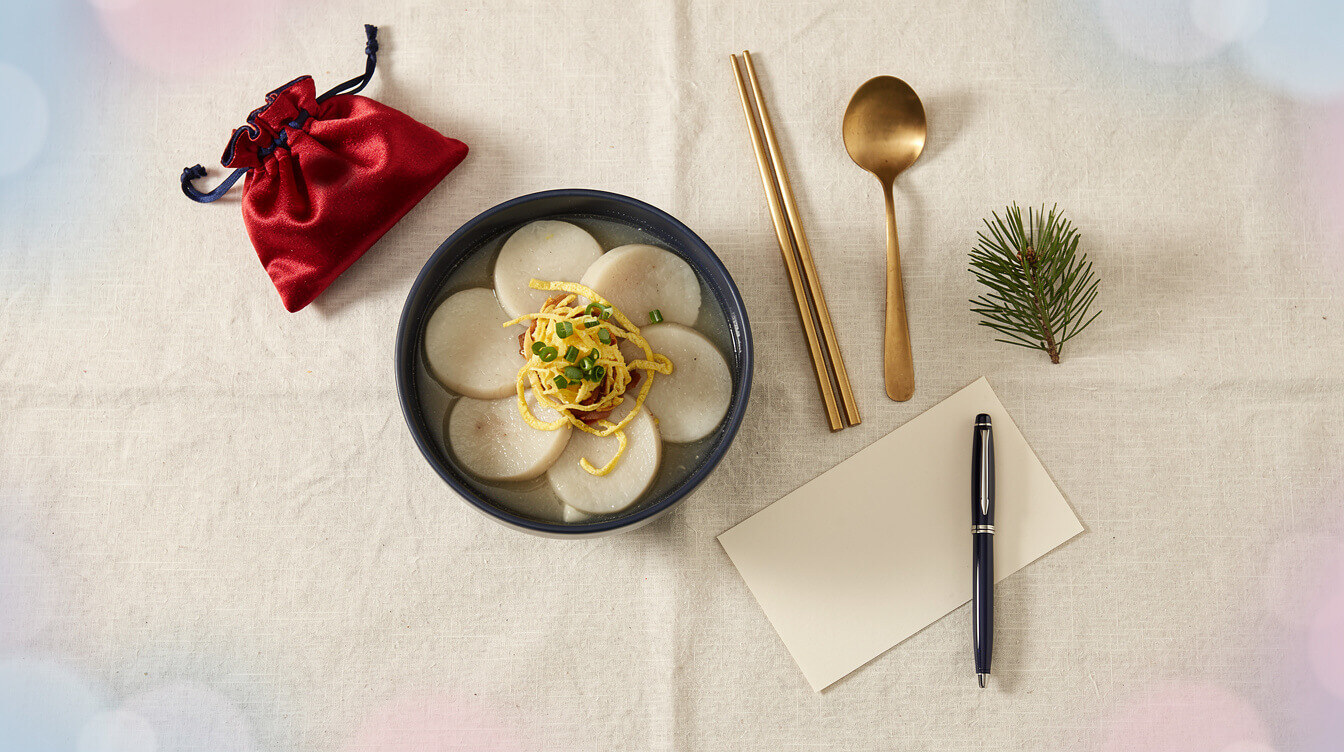
Seollal is the big one for families. From 1985 to 1988 the lunar new year was observed as a “folk day,” and since 1989 it has been a national holiday under the name Seollal. The family side has its own etiquette. Younger relatives perform 세배 (sebae), a deep New Year bow, and receive 세뱃돈 (sebaetdon), crisp pocket money. Everyone eats 떡국 (tteokguk), rice cake soup, which jokingly “adds a year” to your age. That’s a whole post of its own.
One etiquette surprise for the language side: during the bow itself, you don’t talk. The National Institute of Korean Language’s standard etiquette says the bow is the greeting. You don’t need “절 받으세요” (“please accept my bow”) before it, and you don’t need to recite the greeting while you’re folded in half. Bow, wait for the elder’s 덕담, and then add your own wish.
Fan mail
One email a week, written like a group chat
The Korean word everyone's using, the fandom ritual behind it, and the newest designs before they hit the shop. No spam. Unsubscribe anytime.
More New Year wishes that sound natural
Once 새해 복 많이 받으세요 is in your mouth, add one of these to make a card or text feel like it came from you and not from a phrase list.
Wishes for the year ahead
- 올해도 잘 부탁드립니다 (olhaedo jal butakdeurimnida): “Please take good care of me again this year.” It’s the classic line for coworkers, teachers, fan-cafe staff, anyone you’ll keep working with. Casual: 올해도 잘 부탁해.
- 소원 성취하세요 (sowon seongchwihaseyo): “May your wishes come true.”
- 행복한 한 해 보내세요 (haengbokan han hae bonaeseyo): “Have a happy year.”
- 건강 챙기세요 (geongang chaenggiseyo): “Look after your health.” Warm for friends and fans.
The 되세요 question
You’ll see 행복한 새해 되세요 (“become a happy new year”) all over cards and captions, and every Korean understands it. Grammar sticklers point out that the person you’re talking to can’t become a year. The National Institute of Korean Language agrees with the sticklers here. Asked about 즐거운 연휴 되세요 (“have a fun holiday”), it said the hidden subject is the listener, so 보내세요 (“spend”) is the better verb. It made the same point about 복된 한 해 되시길. In speech, 되세요 won’t get you side-eye. In a card to someone’s parents, write 보내세요.
Health wishes, carefully
Health is the most common New Year wish, especially to grandparents. The same institute’s etiquette column adds a gentle warning: dramatic longevity lines like 만수무강하십시오 (“live ten thousand years without end”) or 오래오래 사세요 (“live a long, long time”) can make an elder feel they’ve suddenly gotten old. Its example of a better wish is a specific one, like “go hiking a lot this year.” Wish them the thing they love doing.
The year-end thank-you
Before the year flips, Koreans often thank the people who looked out for them: 한 해 동안 보살펴 주셔서 감사합니다 (han hae dongan bosalpyeo jusyeoseo gamsahamnida), “thank you for looking after me all year.” Keep the thank-you in the present tense. The etiquette column flags the past-tense 고마웠습니다 as the wrong choice for this greeting. And if you see 송구영신 (songguyeongsin, 送舊迎新) on a formal card, the dictionary meaning is “seeing off the old year and welcoming the new.”
The 0:00 KST countdown: happy new year in Korean for fans
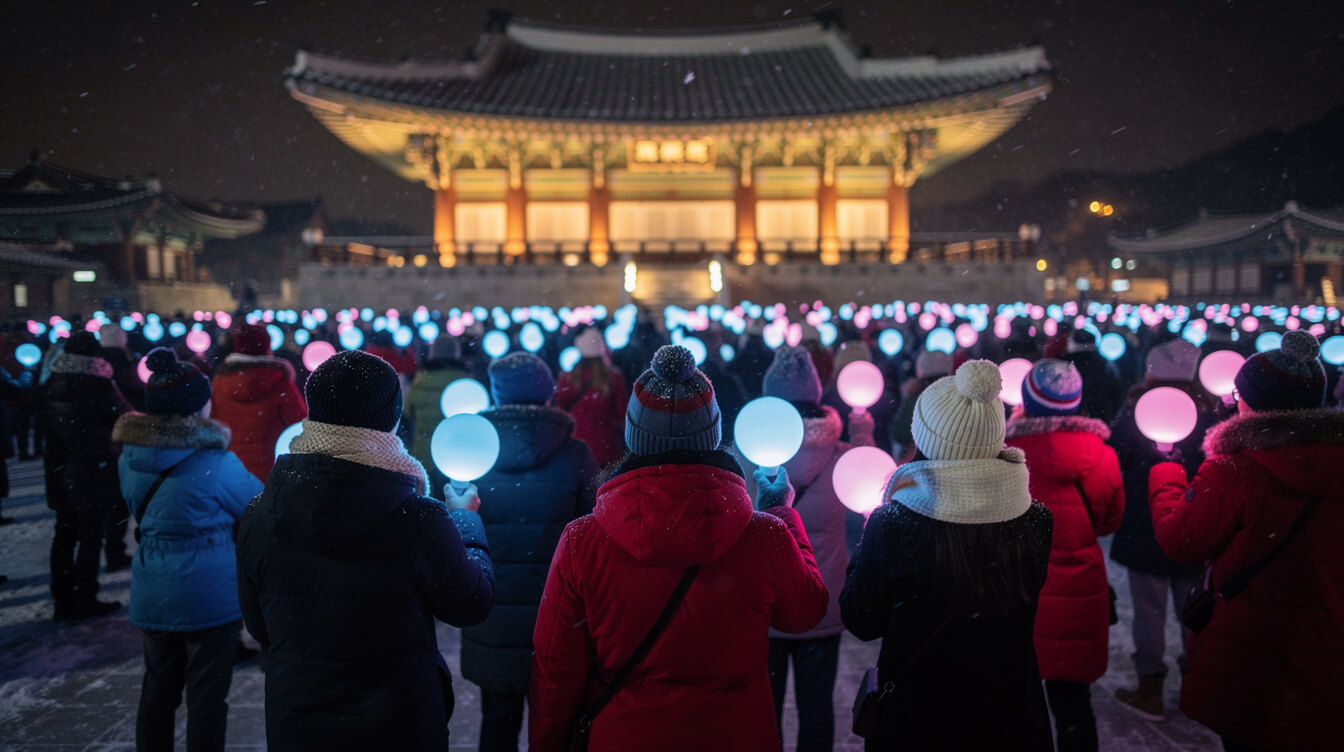
For international fans, New Year has a second midnight: 0:00 KST. Korea runs on UTC+9 and doesn’t use daylight saving time. That means Korean midnight on January 1 is 10 a.m. on December 31 in New York, 7 a.m. in Los Angeles, and 3 p.m. on the 31st in London. You can ring in the Korean new year with your mutuals before lunch, then do it again with your family at night.
In Seoul, the classic midnight moment is 제야의 종 (jeyaui jong), the New Year’s Eve bell at Bosingak pavilion in Jongno. At midnight, it’s struck 33 times. 제야 means the last night of the year. The tradition of ringing in the new year there goes back to 1953. The count of 33 comes from the old Joseon practice of striking the bell 33 times at dawn to open the city gates.
It’s also the end of the year-end stage season, when the timeline is all performances, speeches and fancams. So 0:00 KST is when fan comments flood in. The phrase you’ll see most, under every post, is the plain one: 새해 복 많이 받으세요. Add your bias’s name and a heart, and you’re fluent.
New Year messages you can copy
Swap ○○ for a name. We use the placeholder on purpose: plenty of everyday Korean names are also somebody’s stage name, and you don’t want a family text that reads like a fan letter.
To grandparents or parents (text or card)
할머니, 새해 복 많이 받으세요. 올해도 건강 잘 챙기시고, 좋아하시는 산책 많이 하세요. 사랑해요.
Halmeoni, saehae bok mani badeuseyo. Olhaedo geongang jal chaenggisigo, joahasineun sanchaek mani haseyo. Saranghaeyo.
“Grandma, happy new year. Take good care of your health this year too, and go on lots of the walks you love. I love you.”
(The 사랑해요 at the end is the polite form. Our saranghae guide covers when to use which.)
To a close friend (KakaoTalk energy)
새해 복 많이 받아. 올해도 잘 부탁해. 콘서트 같이 가자.
Saehae bok mani bada. Olhaedo jal butakae. Konseoteu gachi gaja.
“Happy new year. Take care of me again this year. Let’s go to a concert together.”
To a coworker or teacher
○○ 님, 한 해 동안 보살펴 주셔서 감사합니다. 새해 복 많이 받으시고, 올해도 잘 부탁드립니다.
“○○, thank you for looking after me all year. Happy new year, and I look forward to working with you again this year.” The -시고 on 받으시고 links two wishes and keeps the politeness.
In a fan letter
○○에게. 새해 복 많이 받으세요. 작년 한 해 동안 정말 행복했어요. 올해도 아프지 말고, 건강 챙기세요. 항상 응원할게요. 올해도 화이팅!
○○ege. Saehae bok mani badeuseyo. Jangnyeon han hae dongan jeongmal haengbokaesseoyo. Olhaedo apeuji malgo, geongang chaenggiseyo. Hangsang eungwonhalgeyo. Olhaedo hwaiting.
“To ○○. Happy new year. I was so happy all last year. This year too, don’t get sick, and take care of your health. I’ll always cheer for you. Hwaiting for this year too.”
아프지 말고 (“don’t get sick”) is one of the most Korean ways to say “I care about you.” It shows up in letters to friends, family and idols alike. For more letter-ready lines, our happy birthday in Hangul guide walks through a full fan-letter layout.
In a fan-cafe or comment section
새해 복 많이 받으세요. 올해도 같이 가요.
“Happy new year. Let’s keep going together this year.” 같이 가요 (“let’s go together”) is short, warm and works for any fandom.
How to write happy new year in Korean by hand
Handwriting is where most learner cards go wrong, and it’s almost always spacing. Korean puts spaces between words, and this greeting has four words:
새해 · 복 · 많이 · 받으세요, written as 새해 복 많이 받으세요.
- Don’t glue it together. 새해복많이받으세요 is common in quick texts, but on a card it looks rushed.
- Keep the ㅎ in 많이. You can’t hear it, but 마니 is a misspelling.
- 세, not 새, at the end. Many speakers pronounce ㅔ and ㅐ the same, so 받으새요 is a classic slip. 새 belongs only at the start, in 새해.
- Write each syllable as a square. 많 stacks three parts: ㅁ top left, ㅏ on the right, ㄶ underneath. Keep it the same height as its neighbors.
If you’re writing on a red envelope or a cream card, put the greeting on its own line, then the personal wish underneath. Sign off with your name plus 올림 (ollim, “respectfully sent”) for elders, or just your name for friends.
Happy new year in Korean: quick FAQ
Can I say 새해 복 많이 받으세요 at Seollal if I already said it on January 1?
Yes. It’s the greeting for both new years, so you’ll say it twice. Nobody thinks it’s odd.
What do I say to someone I’ve never spoken to, like a shop owner?
새해 복 많이 받으세요, with a small nod. That’s the whole interaction.
What’s the polite way to start a New Year email?
Open with 새해 복 많이 받으십시오 and close with 올해도 잘 부탁드립니다. Use the formal ending in the opening line, then write the rest in your usual polite style.
How do I say “happy Lunar New Year” specifically?
You don’t need a different phrase. Say 새해 복 많이 받으세요, or wish them a good holiday: 설 연휴 잘 보내세요 (seol yeonhu jal bonaeseyo), “have a good Seollal holiday.”
From the shop
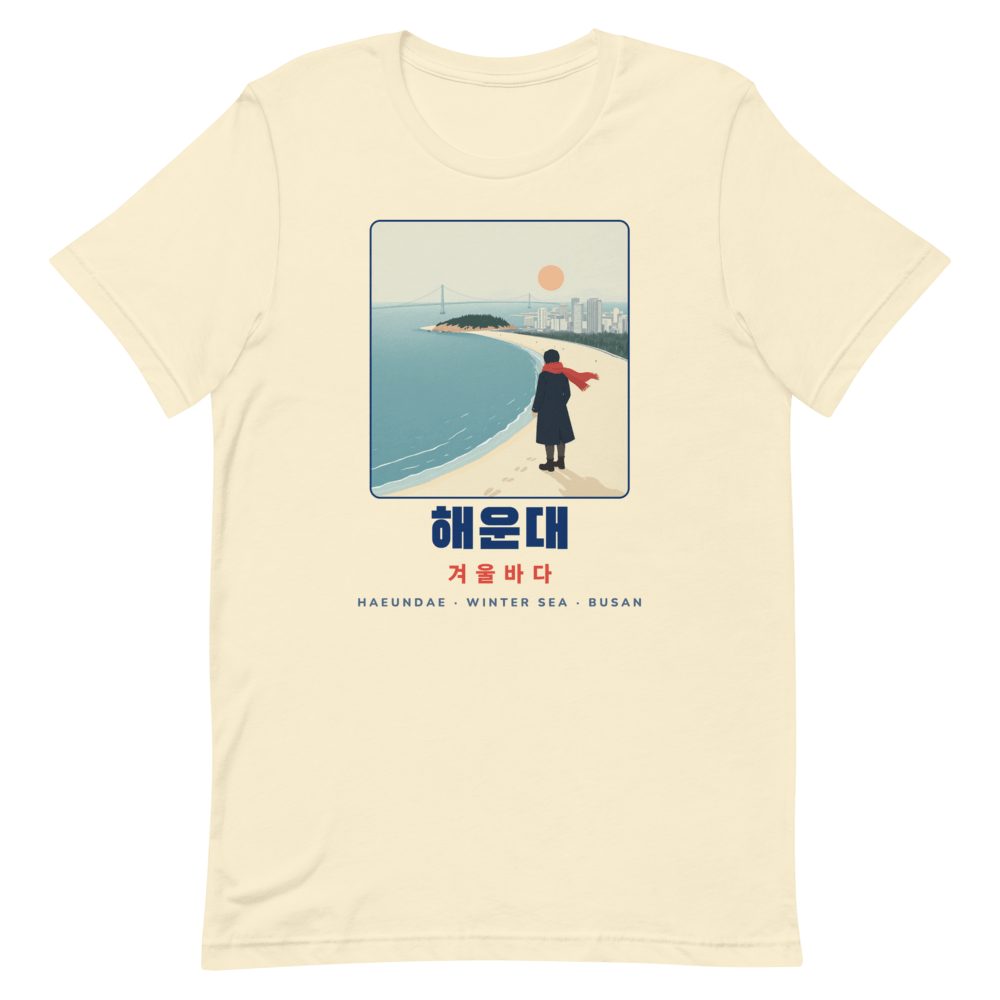
Haeundae Winter Sea Busan T-Shirt – Light Colors
Price range: $24.99 through $26.99
Shop this designSend it before the clock does
You now have the whole kit: 새해 복 많이 받으세요 broken down into new year, fortune, a lot and please receive. You have the formal, polite and casual endings, the mirror reply, both new years and a stack of messages ready to paste. The most natural thing you can do with it is use it. Text your Korean friend at 0:00 KST. Put it on a card for your grandparents. Leave it under your bias’s first post of the year.
If you want to keep the conversation going after the greetings, our guide to how are you in Hangul covers the check-in that comes next. From one fan to another: 새해 복 많이 받으세요.
Before you log off
Get the next one in your inbox
We write about Korean phrases, fandom culture and concert life every day. The best of it lands in one short weekly email.