K팝 콘서트 복장: 공연장 바닥, 대기줄, 그리고 드레스 코드에 맞춰 무엇을 입어야 할까요?
The ticket is booked, the hotel is booked, and the group chat has been arguing about K-pop concert outfits since the presale. Fair. What you wear to a show is part of the show. Fans turn up in their group’s official color, in a look borrowed from a favorite era, in matching sets with their concert buddies, and in Hangul tees they’ve been saving for exactly this night.
But the best K-pop concert outfits aren’t just cute in the mirror at 2 p.m. They still work at the end of a long queue, in the middle of a packed floor, and on the late train home. This is the fan-to-fan version: how to plan around your seat, what dress codes are, how to match with friends, what to wear for heat and cold, which accessories annoy the people behind you, and how to wear Korean words without a typo on your chest.
Packing is its own topic, so the bag, the batteries, and the earplugs live in our checklist of what to bring to a K-pop concert. This one is all about the fit.
K-pop concert outfits start with your seat, not your mood board
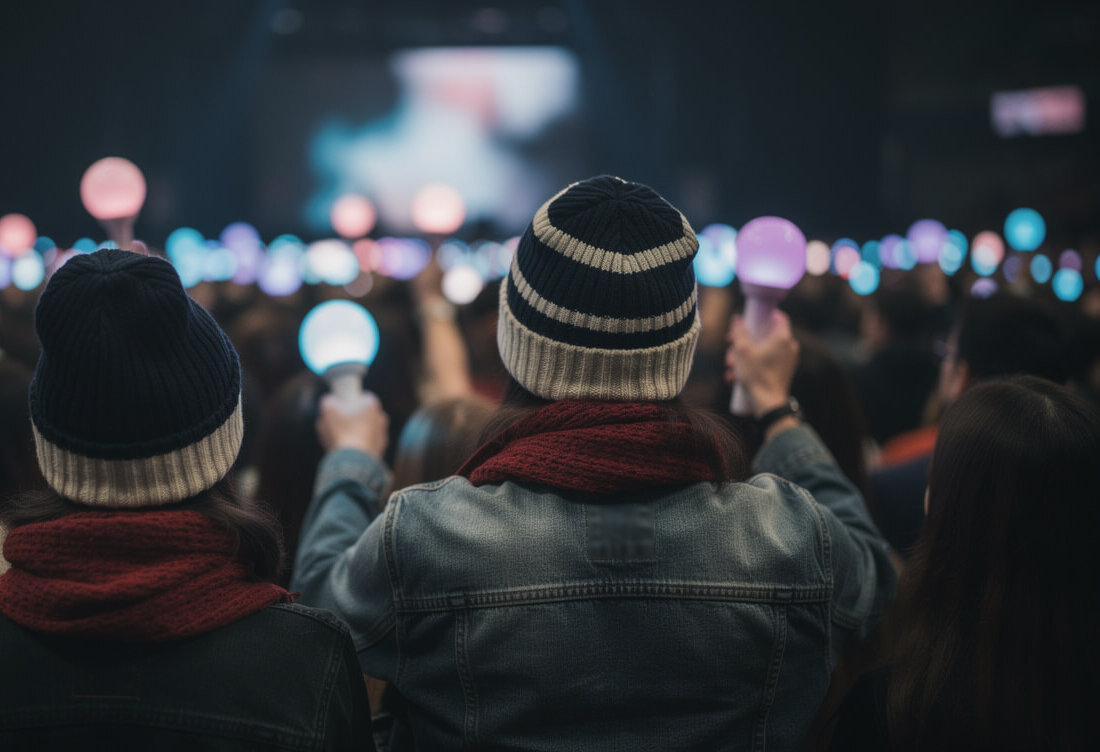
Korean fans call an outfit a 코디 (kodi), short for “coordination.” It’s Konglish, like a lot of fashion vocabulary, and it’s the word you’ll see on every “콘서트 코디” (konseoteu kodi, concert outfit) post when fans share what they wore. A good concert kodi is planned backward from where you’ll actually spend the day.
Standing floor
Standing sections are 스탠딩 (seutaending) on Korean ticketing pages, and they ask the most of your outfit. You’ll be on your feet the whole show and pressed shoulder to shoulder with other fans. It gets warm fast, even in winter. Dress like you’re going to a dance class that happens to be very glamorous:
- Breathable layers you can strip down to, with a base layer you’re happy to be seen in.
- Nothing long and floaty that can get caught or stepped on in a crowd.
- Pockets, or a small crossbody bag that sits in front of you.
- Hair you won’t need to fix every five minutes.
Seated sections
Seats give you more freedom. You can wear the dramatic skirt, the structured jacket, the thing that needs to be sat in carefully. You’ll still stand for most of the show (everyone does), but you’ve got somewhere to put your coat, and you’re not in a crowd that sways.
The whole day, not just the show
Most concert days are mostly 안 concert. There’s the merch line, the freebie trades outside, the photo spots, the wait to get in, and the trip home. Picture yourself at each step. If an outfit only works for the three hours inside, it’s a costume. That’s allowed, but plan a coat, comfortable shoes, or a change for the rest of the day.
Dress codes and official colors: the fandom side of K-pop concert outfits
Here’s what makes K-pop concert outfits different from what you’d wear to a show anywhere else: the crowd often dresses as a crowd.
Official colors
Most groups have an official color, and the fandom wears it the way sports fans wear a jersey. Walk toward a stadium on show day and you can usually tell whose concert it is from two blocks away. The lightstick ocean is in that color, the banners are in that color, and a lot of the outfits are too. It isn’t required, and nobody checks at the door. But wearing the color is the easiest way to feel like part of the whole sea before the first song even starts.
Dress codes
Sometimes a concert gets its own 드레스코드 (deureseukodeu, dress code), which fans shorten to 드코 (deuko). It might come from an official notice, or fans organize it themselves, often one color or theme per night of a multi-day run, so each show has its own look. Fans share these on social media in the weeks before the show, and the coordinated photos afterward are half the fun.
Two things to know about dress codes:
- They’re an invitation, not a rule. Fans who match the code with a single accessory (a ribbon, a scarf, a hair clip in the color) are completely in the spirit of it.
- Check who set it. If it came from an official notice, it’ll be on the official channels. If a fan account set it, it’s a fun idea, not a requirement. Either way, verify the details before you buy a new outfit for it.
Era looks and stage outfits
Plenty of fans dress for a specific era: the concept of a past comeback, the colors of an album, a recreation of a famous stage outfit. Some fans dress for their 최애 specifically, in that member’s signature color or style. If you’re doing a full recreation, check the venue’s rules on props, masks, and anything that looks like a weapon. Security doesn’t care how accurate your replica is.
Matching with friends: couple looks and similar looks
Going with a friend, a sibling, or the whole group chat? Korean fashion has two words for coordinating outfits, and they’re very useful for concert planning.
커플룩: the couple look
커플룩 (keopeulluk, “couple look”) is the full match: the same top, the same jacket, the same color from head to toe. Despite the name, it isn’t only for couples. Friends and families do it too. At a concert it reads instantly as “we came together,” and it photographs beautifully from behind, which is the angle most concert photos are taken from anyway.
시밀러룩: the similar look
시밀러룩 (similleoruk, “similar look”) comes from the English word “similar.” The Korean daily JoongAng Ilbo described it in 2015 as dressing similarly but differently, the couple-look idea with more room for each person’s style, by matching details like material, color, or pattern instead of whole outfits. For a concert squad that’s the sweet spot:
- One shared color. Everyone wears the official color somewhere, in whatever piece suits them.
- One shared item. Matching beanies, scarves, hair ribbons, or bag charms, with everything else your own.
- One shared texture. All denim, all knit, all black with one bright accent.
The similar look is kinder to a group with different budgets, body types, and comfort levels. Nobody has to buy a whole new outfit, and the group photo still looks planned.
Planning it without a fight
Decide early, keep it simple, and make the shared element cheap or something people already own. Then do the classic photo: everyone from behind, lightsticks up, facing the venue. If you’d like to add a hand pose, the 한국식 손가락 하트 works for any group size.
Dressing for the queue: heat, cold, and the hours outside
The weather doesn’t care that you planned this outfit for months. Concert days often mean hours outdoors before you ever see a seat: merch lines, entry lines, and walks from the train. Dress for the outside part first, then make it easy to peel back for the inside part.
Summer and stadium days
The US Centers for Disease Control and Prevention (CDC) advises loose, lightweight, light-colored clothing and sunscreen in extreme heat. Its heat-illness guidance notes that light colors, unlike dark ones, won’t absorb heat from the sun. That’s a problem if your official color is black, so here’s the compromise:
- Wear the light, loose version in the line, and save the dark statement piece for later in the day.
- Choose breathable fabrics and skip anything tight or heavy until you’re inside.
- Bring a hat or a small umbrella for shade if the venue allows them.
Sunscreen counts as part of the outfit. The American Academy of Dermatology recommends a broad-spectrum, water-resistant sunscreen with SPF 30 or higher, reapplied about every two hours outdoors and after sweating. You will be sweating. Reapply in line.
Winter and late-night queues
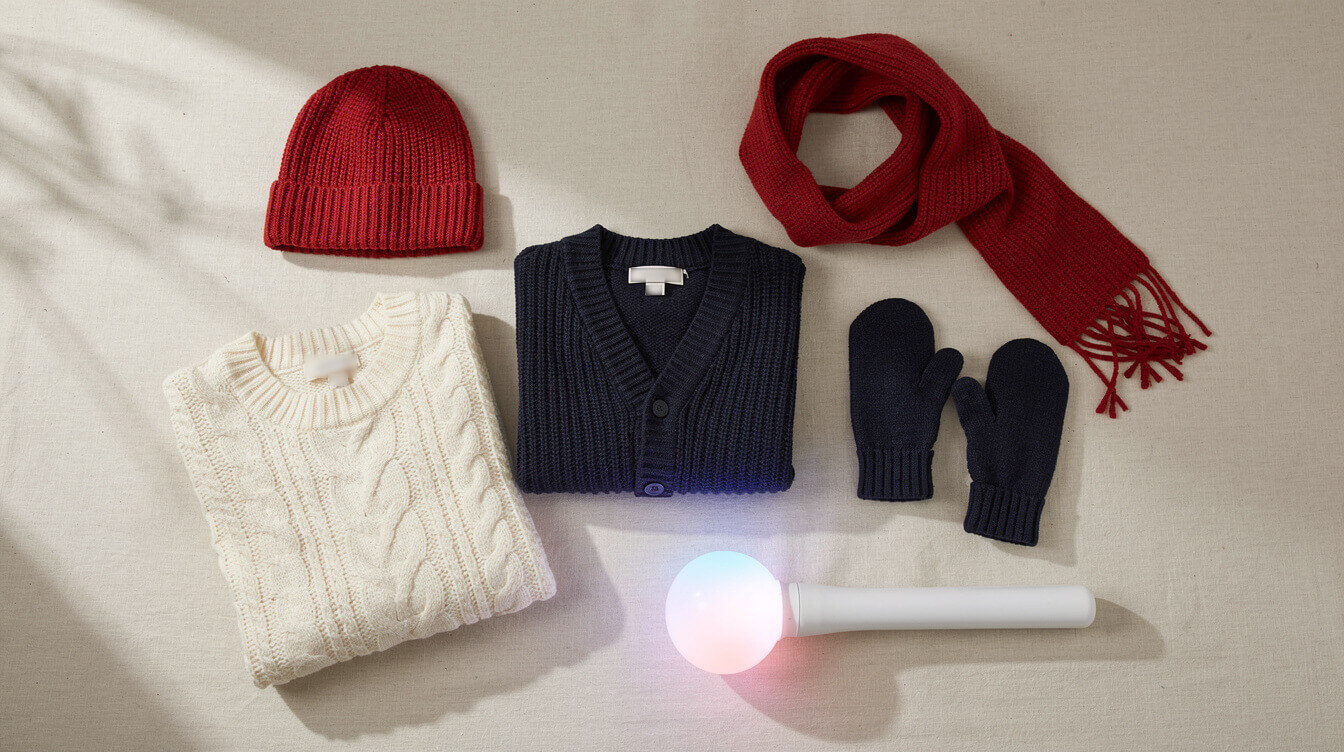
Winter is concert season too, and late-night entry and exit lines can get bitterly cold. The CDC’s winter-weather advice is a solid base for a concert line, too: a hat, a scarf, sleeves that are snug at the wrist, mittens (it notes they’re warmer than gloves), a water-resistant coat and boots, and several layers of loose-fitting clothing. For the inner layer, it notes that wool, silk, or polypropylene hold more body heat than cotton.
Concert translation: a warm base layer under the outfit you actually want to be seen in, then a big coat on top. Wear mittens in the line, but you’ll want your fingers free once the lightstick comes out. Once you’re inside, the floor heats up quickly, so the coat comes off. Check whether your venue has a coat check, or plan to tie the coat around your waist or carry it.
Rain
Outdoor shows sometimes get rain. Umbrellas are often restricted inside, and even where they aren’t, they block everyone’s view. A light rain jacket or poncho in the official color is the fan-approved solution. Check the venue’s rules ahead of time, not at the gate.
팬레터
일주일에 한 통, 단톡방처럼 쓰는 메일
요즘 다들 쓰는 한국어 단어, 그 뒤에 있는 팬덤 문화, 그리고 숍에 올라가기 전의 새 디자인까지 보내드려요. 스팸은 없어요. 구독 취소는 언제든 가능해요.
Shoes, bags, and accessories that don’t ruin the show for anyone
Shoes
This is the one rule nobody breaks twice: wear shoes you’ve already broken in. You’ll stand in line, stand on the floor, jump through the encore, and walk to the train. Platform sneakers are popular for a reason: you get a little height and the shoes are still comfortable. Brand-new boots are how fans end up barefoot on the platform at midnight, holding their shoes and their lightstick.
Bags
Your bag is part of the outfit, and it’s also the thing most likely to get you turned around at the gate. The NFL’s game-day clear-bag policy allows a clear bag up to 12 x 6 x 12 inches plus a small clutch, and concerts at the same stadiums often use something similar. Venues and tours set their own rules, so read the policy page for your show. A clear crossbody in a color that fits your look solves this. More detail is in our what-to-bring checklist.
Hats, headbands, and hair
This is the etiquette section, because your outfit affects the person behind you:
- Tall things come down when the show starts. Big bows, tall headpieces, and stacked buns look great in line. On the floor they block a view someone paid for. If it’s taller than your head, plan for it to come off.
- Light-up accessories are cute, with one caveat. During lightstick-sync moments the whole arena turns one color, and a blinking headband right in someone’s sightline is distracting. Turn it off when the ocean changes.
- Hair goes up for the floor. Long loose hair in a packed standing section ends up in other people’s faces.
Glitter, makeup, and the heat
Concert makeup is a whole art form, and fans go big: gems, glitter, liner in the official color. Just remember the floor is hot, so use setting products, and keep the loose glitter contained. The person next to you didn’t agree to wear it home.
Wearing merch
Official tour merch is a classic concert outfit, and so are fan-made shirts, slogans, and accessories. Wearing another group’s merch to a show is fine too. Plenty of fans love more than one group, and the K-pop crowd is usually warm about it. Wash the new tee before you wear it, though. Your skin will thank you.
Wearing Korean words: get the Hangul right
Hangul on a shirt, a slogan, or a jacket patch is one of the best ways to wear your fandom, and it’s the one thing in your outfit that native speakers will actually read. A few checks before you commit.
Check the blocks, not just the letters
Hangul is written in syllable blocks: consonants and vowels stack into a square, and each square is one syllable. Unicode, the standard behind digital text, includes 11,172 precomposed Hangul syllables, added in Unicode 2.0 in 1996. When a design tool or font doesn’t support Hangul properly, the letters can fall apart into loose pieces or show up as empty boxes. That’s why a Hangul design you made yourself deserves one more look before it’s printed:
- Compare every block, letter by letter, against a trusted source.
- Make sure the blocks are whole syllables, not stray consonants and vowels in a row.
- Check the spacing. Korean puts spaces between words, and moving a space can change how the phrase reads.
Know what it says
Wear words you understand. The classics read well from across a room: 화이팅 (hwaiting, “you’ve got this”), which we break down in 화이팅의 진짜 뜻; 사랑해 (saranghae, “I love you”), covered in 사랑해의 뜻; and 대박 (daebak, “amazing,” or “jackpot”), the subject of our daebak explainer. For something sweeter, there’s 귀여워 (gwiyeowo, “cute”) from our cute를 한글로 쓰면 guide.
Slogans count too
Many fans bring a handheld slogan, a printed cloth or paper banner held up during specific songs. When it’s part of your outfit, the same rules apply: correct Hangul, words you understand, and something you’d be happy to see on the big screen. If your fandom has a fanchant moment where slogans go up, our 응원법 가이드 explains how those cues work.
Frequently asked questions about K-pop concert outfits
Do I have to dress up for a K-pop concert?
No. You’ll see full recreations of stage outfits and you’ll see hoodies and jeans, often in the same row. A K-pop concert outfit is whatever lets you enjoy the show. If you want to join in without dressing up, one item in the official color is plenty.
What should I wear to a K-pop concert in winter?
Layers. A warm base layer, the outfit you want to be seen in, and a big coat over the top for the line. Add a hat, a scarf, and mittens or gloves outside. The floor gets warm, so plan where your coat goes once you’re in.
What should I wear to a K-pop concert in summer?
Loose, light, breathable clothes for the outdoor part, plus sunscreen you reapply in line. Save heavy or dark statement pieces until you’re inside, or make them a single accessory instead.
Is it okay to wear a different group’s merch?
Yes. Lots of fans love more than one group, and wearing other merch is common at shows. Every fandom is welcome.
Can I wear a hat or headband to a K-pop concert?
Usually, but the venue sets the rules, so check its policy. Courtesy matters more: take off anything tall once the show starts, and turn off light-up accessories when the lightstick ocean syncs.
What does 드코 mean?
드코 (deuko) is fan shorthand for 드레스코드 (deureseukodeu), a dress code. When fans post a concert 드코, they mean a suggested color or theme for that show. Unless it says otherwise on the official channels, it’s optional.
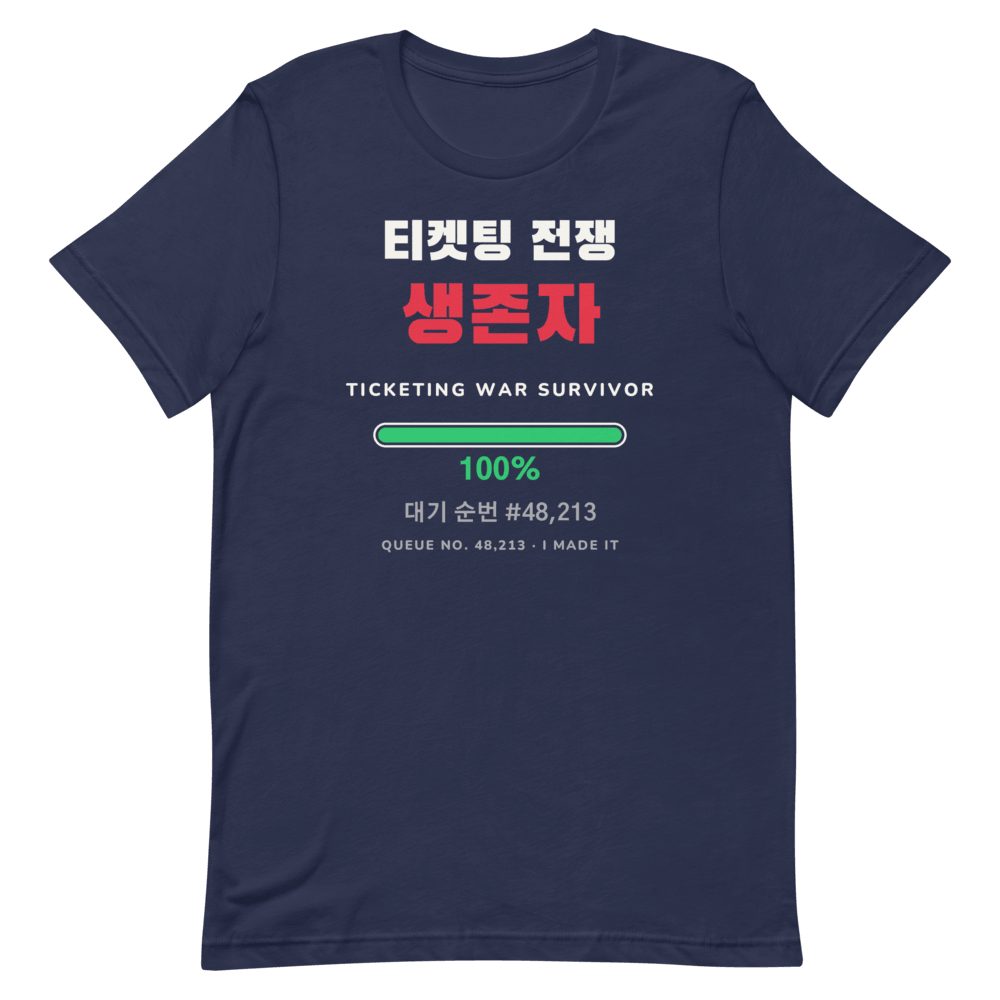
Final thoughts: dress for the fan you’ll be at the encore
The perfect concert outfit is the one you’re still happy in at the encore: shoes that survived the queue, layers that handled the weather, nothing blocking the view behind you, and a little something in the color that tells everyone whose show you’re at. Match your friends if you like. Wear the dress code if it calls to you. If there’s Hangul on your shirt, make sure it says what you think it says.
Then get your camera out for the photo from behind, lightsticks up, facing the stage. Have the best night. 화이팅!
나가기 전에
다음 글을 메일로 받아보세요
저희는 한국어 표현, 팬덤 문화, 콘서트 이야기를 매일 써요. 그중 제일 좋은 글만 모아 매주 짧은 메일 한 통으로 보내드려요.