
한국어로 메리 크리스마스: 팬레터부터 가족 문자까지, 모든 표현을 소개합니다.
Every December my group chat turns into one long string of 메리 크리스마스. My mutuals send it, my cousins send it, and my halmeoni (할머니, “grandma”) sends it with a sticker of a bowing rabbit. If you want to say merry Christmas in Korean, that’s the short answer: 메리 크리스마스 (meri keuriseumaseu, “merry Christmas”). It’s the English phrase, borrowed whole and written in Hangul.
But the short answer only gets you through one text. A card for your grandma, a comment under your bias’s holiday post, and a voice note to your best friend each want a slightly different line. Korean picks the ending by who you’re talking to, and Christmas is no exception.
So this guide does the whole job: the words, the three politeness levels and who gets which, how to write it by hand without the two classic mistakes, how to answer when someone says it to you, and what Christmas actually looks like in Korea. Spoiler: it’s more date night than family dinner.
How to say merry Christmas in Korean
Start with the word for the holiday itself. Korean has two:
- 크리스마스 (keuriseumaseu): “Christmas”, the loanword. This is the one you’ll hear in cafes, see on store windows, and type in every chat.
- 성탄절 (seongtanjeol): the Sino-Korean name, from the Hanja 聖誕節. 성 is “holy”, 탄 is “birth”, and 절 marks a holiday. It sounds more formal and shows up in church, on the news, and in printed greetings, especially among Korean Christians.
Then the greeting. 메리 크리스마스 is “merry Christmas” sounded out in Korean: 메리 (meri) plus 크리스마스. It’s Konglish in the best way, like hwaiting (화이팅): an English phrase Koreans adopted and made their own.
How to pronounce it
English squeezes “Christmas” into two beats. Korean gives it five: 크-리-스-마-스, keu-ri-seu-ma-seu. Korean syllables can’t stack consonants the way English does, so every extra consonant gets its own little vowel, usually ㅡ (eu, a short “uh” with flat lips). Say it evenly, no big stress on any syllable, and you’ll sound right. 메리 is just meh-ree.
Why it’s 크리스마스, not 크리스머스
If you know your IPA, you might expect the second vowel of “Christmas” to come out as 머 (meo). It doesn’t. The National Institute of Korean Language lists 크리스마스 as the standard spelling and 크리스머스 as an incorrect one. When a user asked why in December 2025, the institute’s answer was honest: no record survives of the reasoning. So don’t overthink it. Write 크리스마스.
Merry Christmas in Korean: polite, casual, and formal
메리 크리스마스 has no verb, so it has no politeness ending. That makes it safe and friendly with almost anyone, but a little thin for an elder or a formal card. When you want a full sentence, Korean uses the verb 보내다 (bonaeda, “to spend time”): literally, “spend a happy Christmas.” Pick the ending by who’s reading. If you’re not sure who counts as older or closer, our 오빠, 언니, 형, 누나 가이드 covers how Koreans sort that out.
Casual (반말): friends, mutuals, younger siblings
- 즐거운 크리스마스 보내 (jeulgeoun keuriseumaseu bonae): “Have a merry Christmas.”
- 크리스마스 잘 보내 (keuriseumaseu jal bonae): “Have a good Christmas.” The everyday version you’d say as you leave the last hangout before the holiday.
즐거운 (jeulgeoun) means “fun, joyful.” Swap in 행복한 (haengbokan, “happy”) or 따뜻한 (ttatteuthan, “warm”) and the sentence still works.
Polite (존댓말): the default for almost everyone else
- 즐거운 크리스마스 보내세요 (jeulgeoun keuriseumaseu bonaeseyo): “Have a merry Christmas.” This is the one to memorize.
- 크리스마스 잘 보내세요 (keuriseumaseu jal bonaeseyo): “Have a good Christmas.”
The -세요 ending carries -시-, the honorific marker that raises the person you’re talking about. The National Institute of Korean Language confirmed in a June 2026 answer that a 보내세요 greeting is fine to use with people above you. That covers teachers, coworkers, a friend’s parents, your grandparents, and the idol you’re writing to.
Formal (격식체): printed cards and announcements
- 즐거운 성탄절 보내십시오 (jeulgeoun seongtanjeol bonaesipsio): “Have a joyful Christmas.” You’ll see this on company cards, shop banners, and church bulletins.
Out loud between people who know each other, 보내십시오 sounds stiff. In a handwritten card to someone you actually like, -세요 is warmer.
The 되세요 versus 보내세요 debate
You’ll also see 즐거운 크리스마스 되세요 (doeseyo, “become”). Native speakers write it constantly, and nobody will be confused. But the National Institute of Korean Language has said more than once that 보내세요 is the accurate choice. A person spends a Christmas; a person can’t become one. In an October 2025 answer about 좋은 하루 되세요, the institute noted that people do say it in practice, but the verb doesn’t match the subject, so 보내세요 is the better fit. Hearing 되세요 is fine. Writing 보내세요 is safer, especially to someone older.
How to write merry Christmas in Korean by hand
Handwriting is where the season gets personal. If you’ve already practiced writing 생일 축하해 by hand, this will feel familiar: build each syllable as a block, then mind your spaces.
블록 단위로
- 메 리: ㅁ + ㅔ, then ㄹ + ㅣ. Two blocks.
- 크 리 스 마 스: ㅋ + ㅡ (vowel under the consonant), ㄹ + ㅣ, ㅅ + ㅡ, ㅁ + ㅏ, ㅅ + ㅡ. Five blocks.
- 즐 거 운: ㅈ + ㅡ + ㄹ (the ㄹ sits underneath as a final consonant), ㄱ + ㅓ, ㅇ + ㅜ + ㄴ.
- 보 내 세 요: ㅂ + ㅗ, ㄴ + ㅐ, ㅅ + ㅔ, ㅇ + ㅛ.
Spacing
Korean puts spaces between words, roughly where English does. 즐거운 크리스마스 보내세요 is three words: “joyful”, “Christmas”, “spend”. For 메리 크리스마스, the space follows the English. Korean’s loanword rules let you write a spaced English phrase with the space or close it up, so 메리크리스마스 is accepted too, and you’ll see it everywhere online. On a card, the spaced version looks tidier.
The mistakes that show up on every December feed
- 보네세요 instead of 보내세요. ㅐ (ae) and ㅔ (e) sound almost the same in modern Seoul speech, so even native speakers mix them up. The verb is 보내다, with ㅐ.
- 크리스머스. See above: the standard is 크리스마스.
- 메리 크리스마스 보내세요. “Spend a merry Christmas” works in English, but in Korean 메리 is an English word glued to a Korean verb. Use 즐거운 or 행복한 before 크리스마스 when you add 보내세요.
Three card templates
For a friend (casual):
○○아, 메리 크리스마스.
올해도 같이 놀아 줘서 고마워.
즐거운 크리스마스 보내.
하나가
“(Name), merry Christmas. Thanks for hanging out with me again this year. Have a merry Christmas. From Hana.” Write your friend’s name where the ○○ is. The 아 after it is the friendly vocative particle: 아 after a name ending in a consonant, 야 after one ending in a vowel. Our birthday guide walks through it. Signing off with your name plus 가 or 이가 means “from me.”
For family (polite):
할머니, 메리 크리스마스.
따뜻한 크리스마스 보내세요.
늘 건강하시길 바라요. 사랑해요.
손녀 하나 드림
“Grandma, merry Christmas. Have a warm Christmas. I hope you stay healthy always. I love you. From your granddaughter, Hana.” 드림 (deurim) is the humble “given by” sign-off you use with elders. Use 손자 (sonja) if you’re a grandson. 사랑해요 is the polite saranghae, and grandparents love seeing it in writing.
For a fan letter (polite):
메리 크리스마스.
올해도 무대 보면서 정말 행복했어요.
추운데 감기 조심하고, 즐거운 크리스마스 보내세요.
항상 응원해요.
“Merry Christmas. Watching your stages made me so happy again this year. It’s cold, so watch out for colds, and have a merry Christmas. I’m always cheering for you.” Most fans write to idols in polite 해요체 even when the idol is younger. It’s warm without being overfamiliar. 감기 조심하세요 (gamgi josimhaseyo, “careful not to catch a cold”) is the classic winter-letter line in any Korean card.
How to reply when someone says merry Christmas
Someone just wished you a merry Christmas in Korean. Now what? Thank them, then send it back. That’s the whole formula.
- 고마워, 너도 메리 크리스마스 (gomawo, neodo meri keuriseumaseu): “Thanks, merry Christmas to you too.” Casual, for friends your age or younger.
- 고마워요. 즐거운 크리스마스 보내세요 (gomawoyo. jeulgeoun keuriseumaseu bonaeseyo): “Thank you. Have a merry Christmas.” Polite, for nearly everyone.
- 감사합니다. 선생님도 즐거운 크리스마스 보내세요 (gamsahamnida. seonsaengnimdo…): “Thank you. You too, teacher, have a merry Christmas.” More formal, with their title.
- 메리 크리스마스, said right back. Totally fine at any level, especially in a group chat.
The “you too” trap
English “you too” tempts learners to reach for 당신도 (dangsindo). Don’t. As we covered in 한글로 어떻게 지내세요?, 당신 aimed at someone you don’t know well usually sounds rude or oddly intimate. Korean says “you too” with the person’s name or title plus 도 (“also”): 할머니도, 선배님도, ○○ 씨도. With close friends, 너도 is fine. If you’re unsure, drop “you” entirely and just repeat the greeting. Nobody will notice the missing word.
팬레터
일주일에 한 통, 단톡방처럼 쓰는 메일
요즘 다들 쓰는 한국어 단어, 그 뒤에 있는 팬덤 문화, 그리고 숍에 올라가기 전의 새 디자인까지 보내드려요. 스팸은 없어요. 구독 취소는 언제든 가능해요.
Christmas and New Year in one line
Korean cards often roll both holidays together, since they land a week apart. The standard combined line is:
즐거운 성탄절 보내시고 새해 복 많이 받으세요 (jeulgeoun seongtanjeol bonaesigo saehae bok mani badeuseyo): “Have a merry Christmas, and receive many blessings in the new year.”
Swap 성탄절 for 크리스마스 if you want it less formal. The -시고 ending links the two wishes and keeps the politeness of the first. For a friend, go casual: 메리 크리스마스, 새해 복 많이 받아 (saehae bok mani bada).
새해 복 많이 받으세요 is a whole world of its own: it’s said at the solar New Year and again at Seollal, and the reply set is different from Christmas. It gets its own guide to happy new year in Korean, so here it’s just the second half of your card.
What Christmas looks like in Korea

If you grew up with Christmas as the big family holiday, Korea’s version will surprise you. Here’s the short tour, and our full guide to Christmas in Korea has the history, the food, and the year-end season.
It’s a public holiday
December 25 is one of South Korea’s public holidays, listed as 크리스마스 or 성탄절. Offices and schools close. Christmas Eve, though, is a normal working day, which explains a lot about how frantic the evening gets.
It’s a couples’ day more than a family day
Korea already has two big family holidays: Seollal (설날, Lunar New Year) and Chuseok (추석, the autumn harvest holiday). Those are the days for driving to grandma’s and eating too much. So Christmas, especially Christmas Eve, drifted toward friends and couples instead: date nights, restaurant reservations made weeks ahead, and the annual “크리스마스에 뭐 해?” (keuriseumaseue mwo hae?, “what are you doing for Christmas?”) that single friends dread.
There’s a bit of history behind the late-night energy too. South Korea had a nighttime curfew until it was abolished in January 1982, and Christmas was among the few dates when it was lifted. A night when you could legally stay out until morning was a big deal, and Christmas Eve has had a going-out reputation ever since.
Cake, lights, and carols
- Cake. Picking up a Christmas cake is one of the most Korean Christmas scenes there is: people carrying cake boxes home on Christmas Eve, and bakeries in their busiest stretch of the year.
- Lights. Shopping districts and plazas put up big light displays and trees, and couples and friends go just to walk through them and take photos.
- Carols. The standard spelling is 캐럴 (kaereol), though you’ll see 캐롤 on half the signs in town.
- 마니또 (manitto). Korea’s word for a secret-friend game, close to a Secret Santa. Classes, clubs, and friend groups draw names, quietly look after their person for a while, then reveal themselves with a gift.
Fan Christmas: season’s greetings, comments, and gifts
For fans, December has its own calendar. A few rituals worth knowing:
Season’s greetings
Many groups put out a 시즌 그리팅 (sijeun geuriting, “season’s greetings”) package near the end of the year: usually a desk calendar, a planner or diary, photos, and small extras for the year ahead. Fans shorten it to 시그 (sigeu). Unboxing posts, trades for the photos inside, and “which month is your favorite page” debates fill the timeline for weeks. If you collect, our photocard guide covers sleeves, binders, and trading etiquette.
Holiday comments and posts
When your bias posts a holiday photo or goes live on Christmas, the comments fill with Korean greetings. A polite, warm comment is the move:
- 메리 크리스마스. 따뜻하게 보내세요 (ttatteutage bonaeseyo): “Merry Christmas. Stay warm.”
- 올해도 고마웠어요 (olhaedo gomawosseoyo): “Thank you for this year too.” The line fans use to wrap up a year of content.
Short, kind, and in 해요체 beats a long paragraph every time.
Letters and gifts
December is peak fan-letter season, so the template above gets a lot of use. If you plan to mail anything, check the official fan community’s current mail and gift notice first. Rules about what can be sent change, and a letter that follows them actually arrives.
With your own fandom friends, Christmas looks like everyone else’s: a gift exchange at the streaming party, a 마니또 draw in the group chat, and a lot of 메리 크리스마스 typed at midnight.
Merry Christmas in Korean: quick FAQ
How do Korean people say merry Christmas?
Most often 메리 크리스마스 (meri keuriseumaseu), especially between friends and online. In a full sentence, 즐거운 크리스마스 보내세요 (polite) or 즐거운 크리스마스 보내 (casual).
What is Christmas called in Korea?
크리스마스 (keuriseumaseu) in everyday speech, and 성탄절 (seongtanjeol, “holy birth day”) in formal and church settings.
Is Christmas a holiday in South Korea?
Yes. December 25 is a public holiday. Christmas Eve is not.
Can I say 메리 크리스마스 to my grandparents?
Yes, it’s friendly and nobody will mind. For a card, add a polite sentence after it: 할머니, 메리 크리스마스. 따뜻한 크리스마스 보내세요.
Is it 되세요 or 보내세요?
Both are common. 보내세요 is the version the National Institute of Korean Language calls accurate, so use it when you’re writing to someone older.
Does 메리 크리스마스 have a space?
The spaced version mirrors the English and is the tidy choice. Korean’s loanword spelling rules also allow writing it as one word, so 메리크리스마스 isn’t wrong.
Write the card, then hit send
If one idea sticks, make it this: 메리 크리스마스 gets you through the group chat, and 즐거운 크리스마스 보내세요 gets you through everything else. Pick casual for friends, polite for everyone above you, and formal only when you’re printing banners.
Then write it by hand at least once. Grandparents keep those cards. So do best friends. And somewhere in an agency mailroom, a stack of December letters in careful, slightly wobbly Hangul is exactly why fans keep writing them.
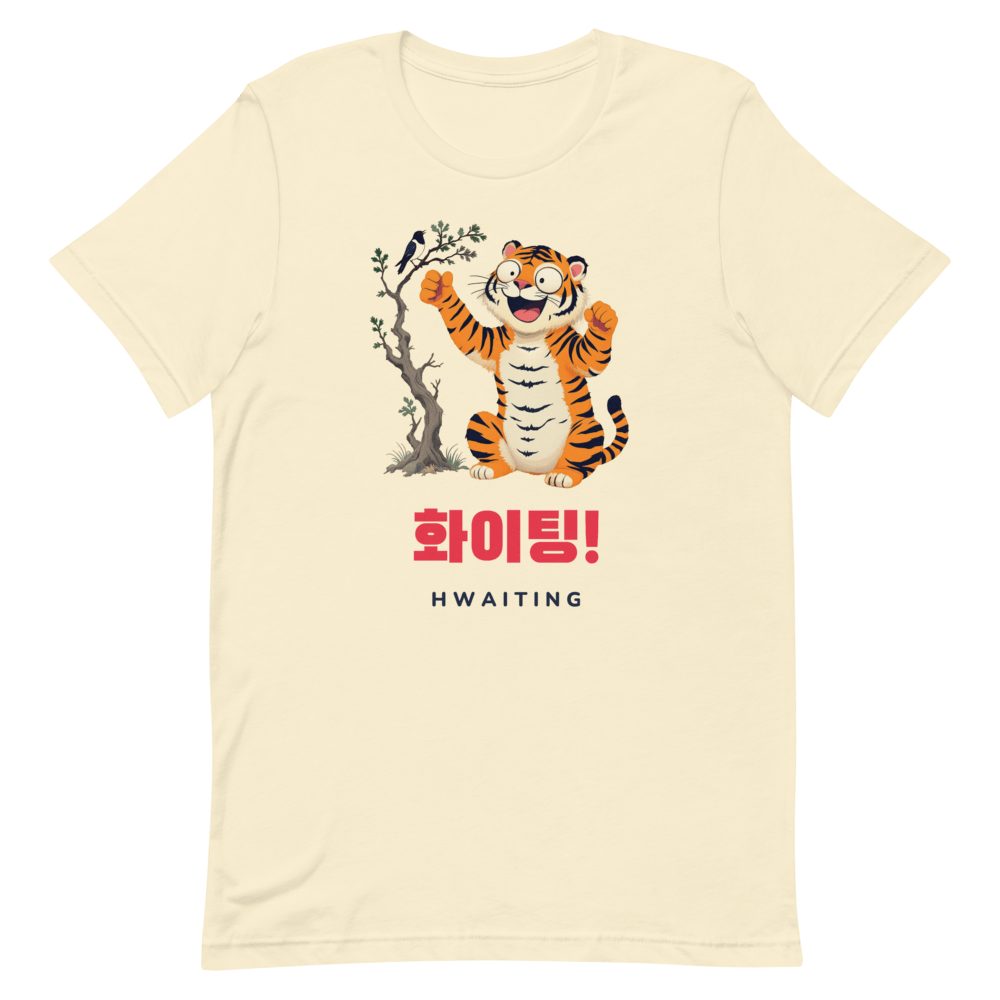
Merry Christmas, from our fandom to yours. 화이팅!
나가기 전에
다음 글을 메일로 받아보세요
저희는 한국어 표현, 팬덤 문화, 콘서트 이야기를 매일 써요. 그중 제일 좋은 글만 모아 매주 짧은 메일 한 통으로 보내드려요.